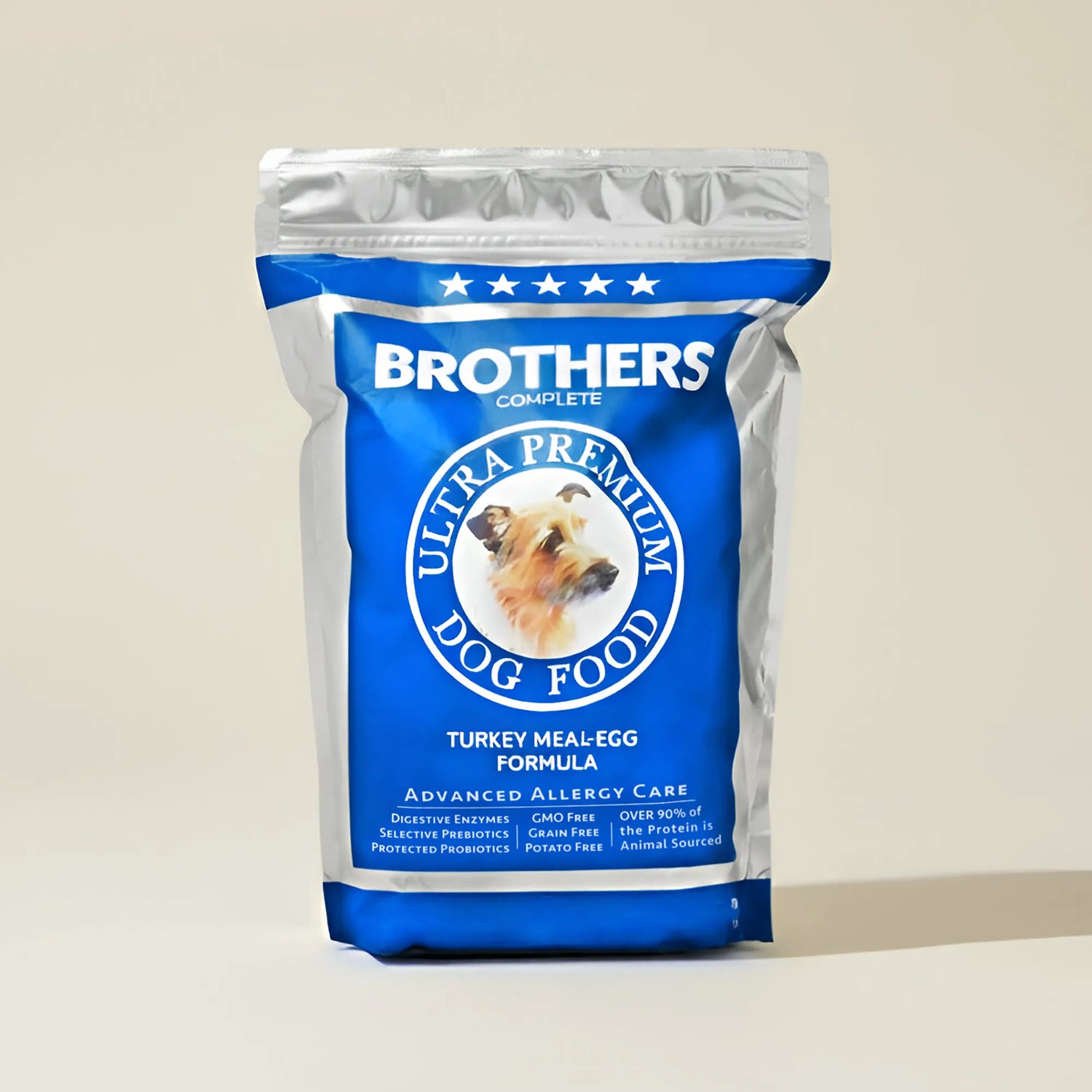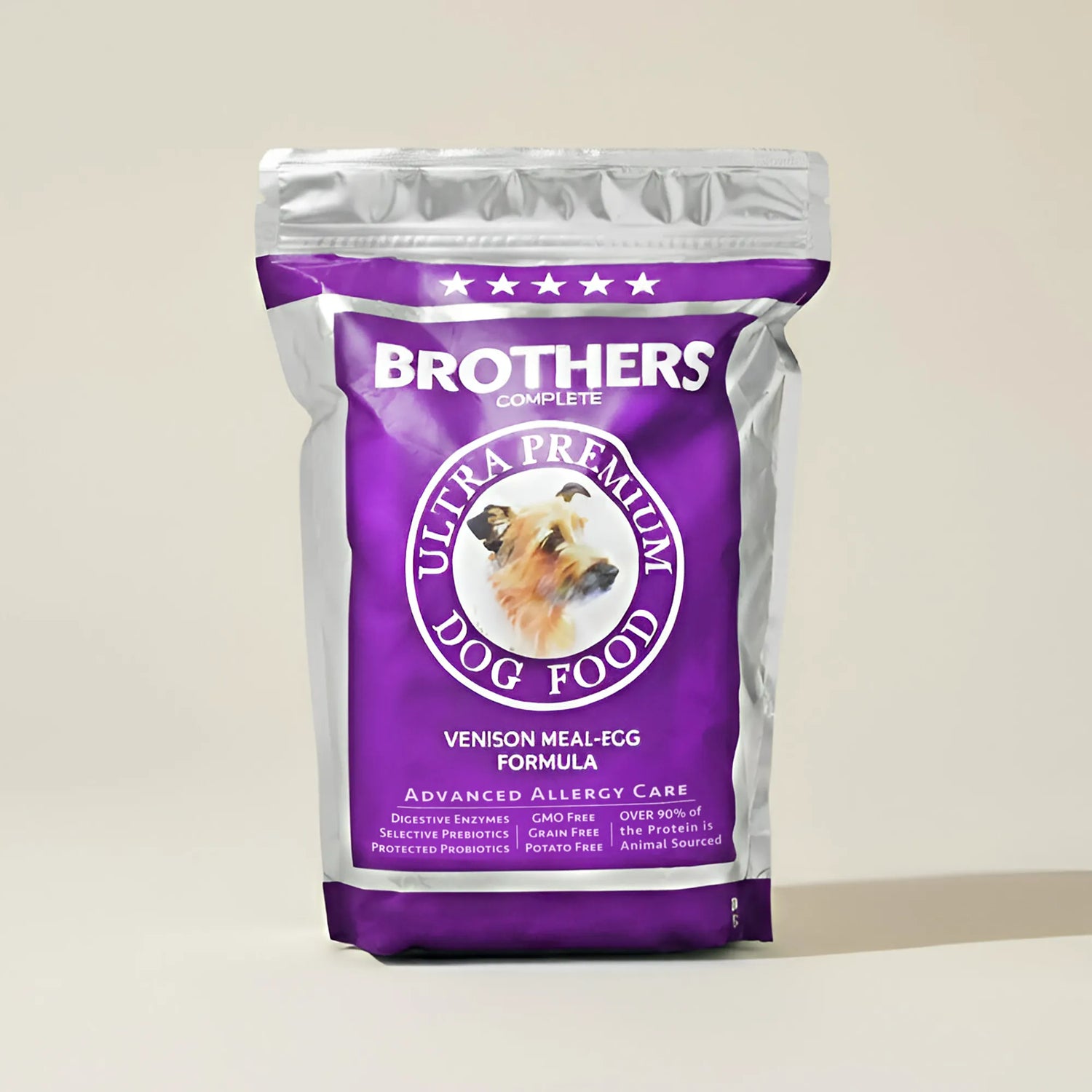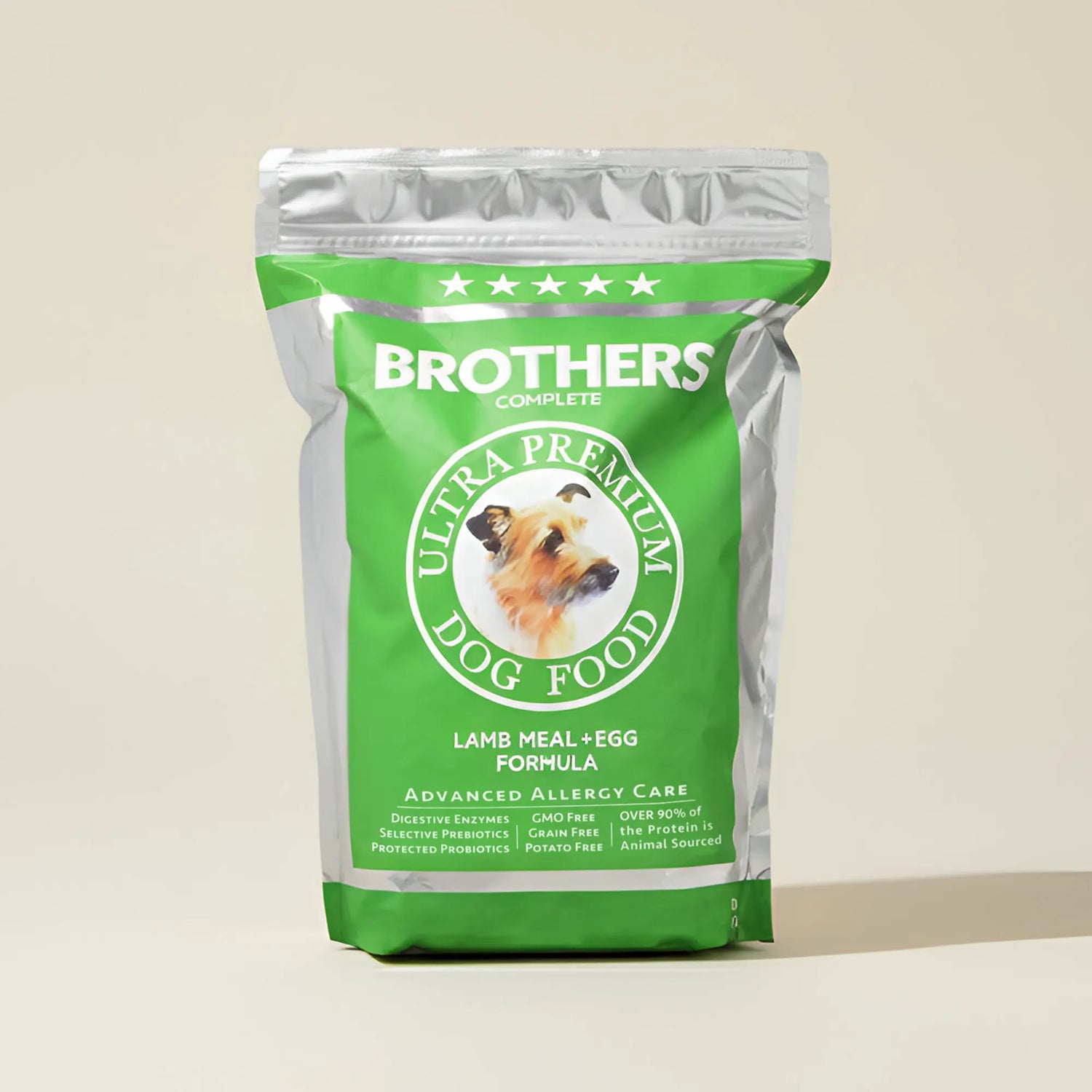


Best Food for Dogs with Sensitive Stomachs
If your dog regularly struggles with an upset stomach, loose stools, gas, or vomiting after meals, you're not alone, and you're probably tired of the trial-and-error cycle of switching foods, hoping the next bag will finally bring relief. Sensitive stomachs in dogs are incredibly common, and they can stem from food intolerances, poor-quality ingredients, lack of digestive support, or underlying gut imbalances that make it hard for your dog to process even "premium" foods.
At Brothers Dog Food, we believe in gut-health-first nutrition because a healthy digestive system is the foundation for everything else. That means transparent ingredient sourcing, science-backed formulas with digestive enzymes and probiotics, and no fillers or artificial additives that can trigger inflammation. We're here to help you understand what actually works for dogs with sensitive stomachs, so you can make a confident, informed choice.
Quick Summary:
- Prebiotic fibers like chicory root and pumpkin support beneficial gut bacteria and help regulate digestion in dogs with upset stomachs
- Digestive enzymes and probiotics are essential for breaking down food and maintaining a balanced gut microbiome
- Avoid common irritants like corn, wheat, soy, and artificial preservatives. These can trigger inflammation and worsen digestive issues
- Gut health is the foundation. Without it, even premium ingredients won't be properly absorbed or tolerated
What Causes Sensitive Stomachs in Dogs?
A "sensitive stomach" is often a symptom, not a root cause. Dogs can experience chronic digestive upset for several reasons: food intolerances (reactions to specific ingredients like beef or grains), poor-quality ingredients that are hard to digest, lack of digestive enzymes needed to break down proteins and fats, or an imbalanced gut microbiome where harmful bacteria outnumber the beneficial strains.
Many commercial dog foods contain fillers like corn, wheat, and soy. Ingredients that provide cheap calories but offer little nutritional value and can be difficult for dogs to digest. Add in artificial colors, flavors, and preservatives, and you've got a recipe for inflammation and gut irritation. When the digestive system is constantly stressed, it becomes even more reactive to foods that would otherwise be tolerated.
The result? Chronic diarrhea, gas, vomiting, poor nutrient absorption, and sometimes secondary issues like itchy skin or chronic ear infections. If you've been told your dog has a "weak stomach," the real issue is often the quality and digestibility of the food, not your dog's inherent fragility.
What to Look for in Sensitive Stomach Dog Food
Prebiotic Fibers for Gut Balance
One of the most important, and often overlooked, components of digestive health is prebiotic fiber. Prebiotics are nutrients that feed the beneficial bacteria already living in your dog's gut. According to the AKC, "Prebiotics are nutrients that are designed to nourish and promote the growth of good bacteria that are already living in the gut."
Chicory root and pumpkin are two excellent sources of prebiotic fiber. They help regulate bowel movements, reduce inflammation, and create an environment where healthy gut bacteria can thrive. For dogs with sensitive stomachs, this kind of targeted gut support is non-negotiable, it's not just about what you remove from the formula, but what you actively include to rebuild digestive health.
Digestive Enzymes & Probiotics
Even the highest-quality protein won't help your dog if their digestive system can't break it down efficiently. Digestive enzymes, like protease, lipase, and amylase, are responsible for breaking down proteins, fats, and carbohydrates into absorbable nutrients. Many dogs with sensitive stomachs simply don't produce enough of these enzymes on their own.
Probiotics, live beneficial bacteria, work alongside enzymes to maintain a balanced gut microbiome. Together, they ensure food is digested thoroughly, reduce gas and bloating, and support immune function. A gut-health-first formula should include both digestive enzymes and probiotics as core ingredients, not afterthoughts.
Avoid Common Irritants
Dogs with sensitive stomachs need food that's as clean and simple as possible. That means no corn, wheat, or soy. These ingredients are common fillers that provide minimal nutrition and can trigger digestive inflammation. It also means no artificial colors, flavors, or preservatives, like BHA, BHT, or ethoxyquin, which have been linked to gut irritation and long-term health concerns.
Look for formulas that prioritize real, whole-food ingredients, named animal proteins, digestible carbohydrates like sweet potato or oats, and naturally preserved fats. Transparency matters: if a brand won't tell you exactly where their ingredients come from or how they're processed, that's a red flag.
Why Many "Sensitive Stomach" Foods Still Cause Issues
Walk down the pet food aisle, and you'll see dozens of bags labeled "sensitive stomach," "easy digestion," or "gentle formula." But many of these products still rely on cheap fillers, low-grade proteins, and minimal digestive support. A formula might be grain-free or single-protein, but if it doesn't actively support gut health with prebiotics, probiotics, and enzymes, it's only addressing part of the problem.
Some brands also use rendered by-products or unnamed meat meals, ingredients that are technically digestible but lack the nutrient density and bioavailability of premium-grade proteins. Others add synthetic vitamins and minerals to "fortify" the food, but without a healthy gut to absorb them, those nutrients just pass through unused.
The result is a cycle of frustration: you switch foods, see temporary improvement, then the symptoms return. The missing piece is almost always comprehensive gut support, not just removing irritants, but actively rebuilding digestive function from the inside out.
The Brothers Dog Food Difference
At Brothers, we don't just market to sensitive stomachs, we build our entire formula around gut health as the foundation for everything else.
How Gut-Health-First Nutrition Supports Long-Term Health
When you prioritize digestive health, the benefits extend far beyond firmer stools and less gas. Here's what happens when your dog's gut is functioning optimally:
- Better nutrient absorption. Digestive enzymes and probiotics ensure proteins, fats, and vitamins are broken down and absorbed, not wasted
- Stronger immune function. Up to 70% of a dog's immune system is located in the gut; a balanced microbiome means better defense against illness
- Reduced inflammation. A healthy gut lining prevents "leaky gut," where toxins and undigested proteins enter the bloodstream and trigger systemic inflammation
- Improved skin and coat health. Many cases of itchy skin and ear infections are linked to gut imbalances; fixing digestion often clears up these secondary issues
- More energy and vitality. When food is digested efficiently, your dog gets more usable energy from every meal, leading to better stamina and quality of life
Sensitive stomachs aren't a life sentence, they're a signal that your dog's digestive system needs. Targeted, science-backed support. With the right formula, most dogs see dramatic improvement within weeks. Learn more about the healing process when switching foods.
Final Thoughts: Your Dog Deserves Better Than Trial & Error
If you've been cycling through sensitive stomach formulas with mixed results, the problem isn't your dog, it's that most foods don't address the root cause of digestive upset: compromised gut health. Real relief comes from a formula that actively supports digestion with enzymes and probiotics, eliminates common irritants, and uses only premium-grade, transparent ingredients.
At Brothers Dog Food, we built our entire company around this philosophy. We're not here to sell you marketing claims or trendy buzzwords. We're here to give your dog the gut-health-first nutrition they need to thrive, so you can stop worrying about what's in the bowl and get back to enjoying more healthy, happy years together.
Because more healthy years with your best friend? That's always the goal.
Gut-first nutrition since 2009
Made for the dog who reacts to everything