


If your dog is itching, scratching, licking their paws raw, getting recurring ear infections, or struggling with loose stools, food allergies and sensitivities may be the cause. The right dog food for allergies can quiet the symptoms, restore a healthy coat, and rebuild the gut & immune health that drives long-term wellness.
Brothers Dog Food for Allergies is built around three principles veterinarians recommend for dogs with food sensitivities:
- Limited-ingredient recipes: fewer components means fewer potential triggers
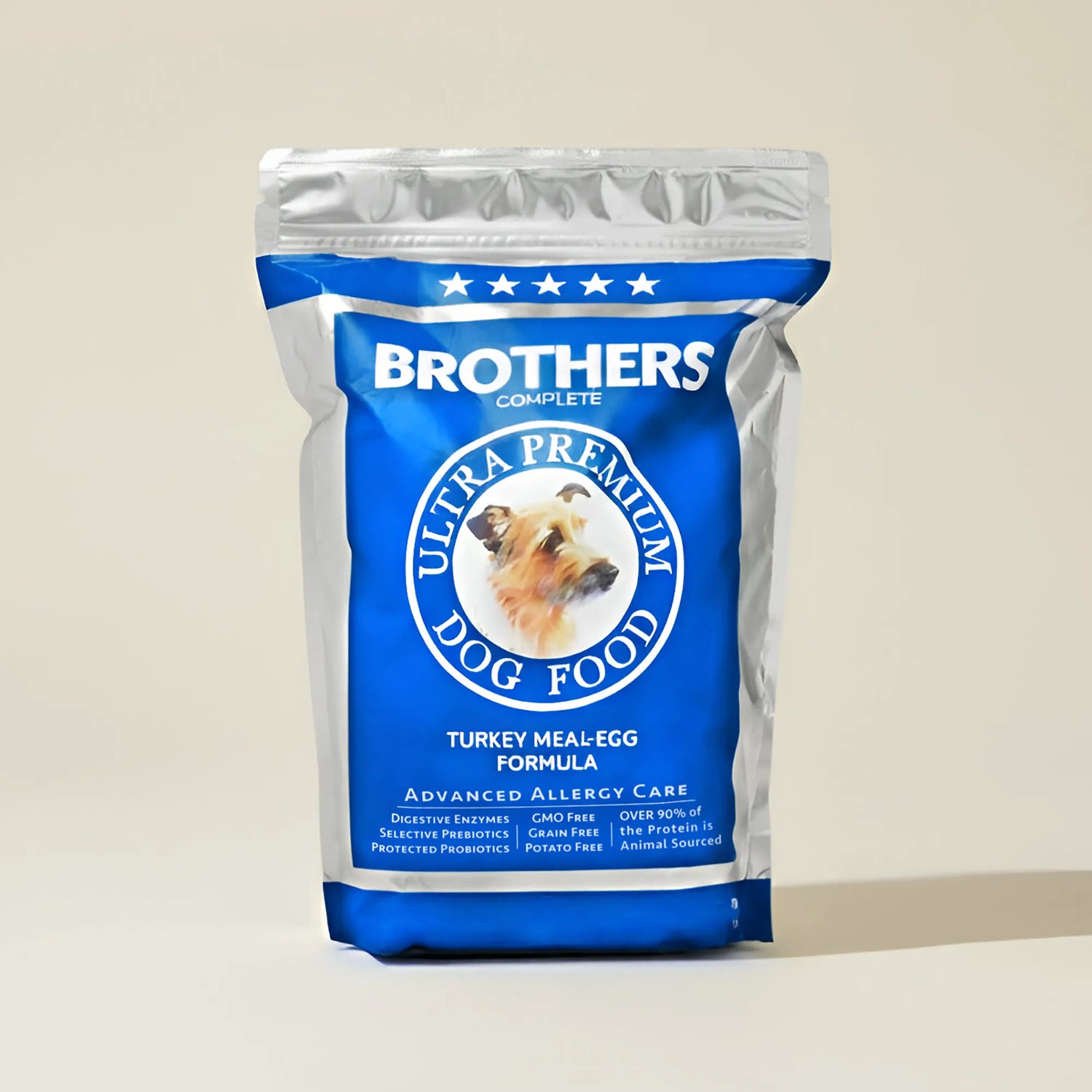
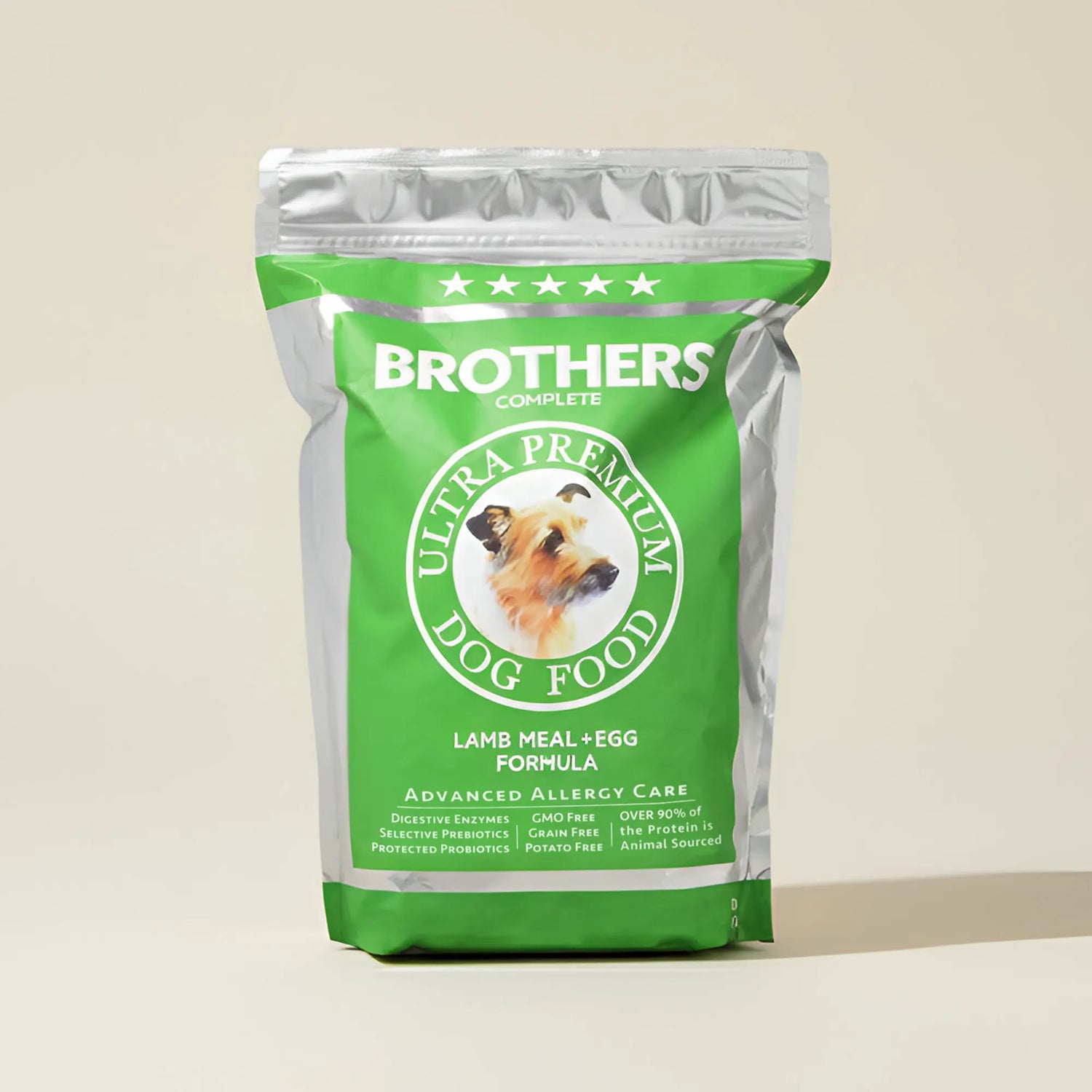
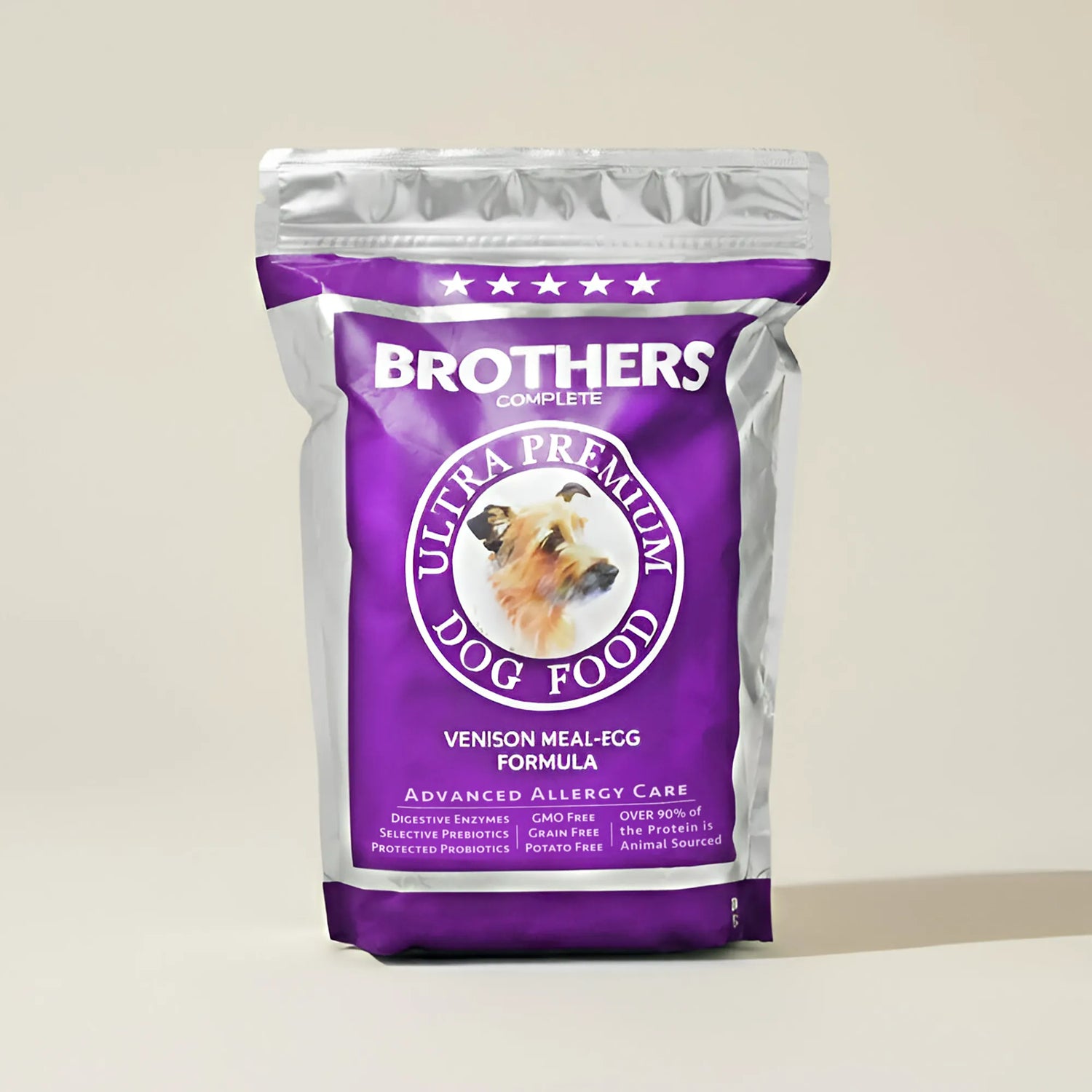
- Novel and single-source proteins: turkey, lamb, and venison alternatives to common allergens like beef and chicken
- Grain-free formulas: no wheat, corn, or soy that can fuel skin and yeast issues
- Built-in probiotics and omega fatty acids: to soothe inflamed skin and rebalance digestion from the inside
- No artificial colors, flavors, or preservatives: additives that frequently trigger allergic responses
Whether your dog has a confirmed food allergy, suspected sensitivity, or a vet-prescribed elimination diet, Brothers offers recipes formulated to reduce symptoms and support a healthier, calmer dog.
Understanding Dog Food Allergies
Food allergies in dogs occur when the immune system reacts to a specific protein or ingredient in their diet. The body treats it as a threat and triggers an inflammatory response, which shows up as itchy skin, recurring ear infections, hot spots, loose stools, gas, or chronic licking and chewing. Unlike seasonal allergies, food allergies don't go away with the weather. They get worse as long as the trigger ingredient stays in the bowl.
The most common food allergens in dogs, according to veterinary research, are:
- Beef: the #1 reported food allergen in dogs
- Dairy: including milk, cheese, and yogurt-based treats
- Chicken: common because it's in the majority of mainstream kibbles
- Wheat: gluten-containing grains
- Corn & soy: common fillers in budget kibble
- Artificial colors, flavors, and preservatives: additives the immune system can flag as foreign
If you suspect a food allergy, work with your veterinarian to confirm it. The gold standard is an elimination diet: feed a single-protein, limited-ingredient recipe for 8–12 weeks, then carefully reintroduce foods one at a time to identify the culprit.
Hypoallergenic vs. Limited-Ingredient vs. Novel Protein: What's the Difference?
These three terms get used interchangeably, but they aren't the same thing. Understanding the difference helps you choose the right recipe for your dog's specific situation.
Limited-ingredient dog food (LID)
A limited-ingredient diet uses the smallest possible number of components and a short list of supportive nutrients. The goal is to reduce the number of potential trigger ingredients in any meal. LID is the most practical starting point for dogs with mild to moderate sensitivities.
Novel protein dog food
A novel protein is one your dog has never been exposed to before. Common novel proteins include venison, duck, rabbit, and kangaroo. Anything outside the standard chicken-beef-lamb rotation most kibbles use. Novel proteins are the foundation of veterinary elimination diets because the immune system can't react to a protein it has never seen.
Hypoallergenic dog food
Strictly speaking, true hypoallergenic recipes are veterinary prescription formulas where proteins have been hydrolyzed (broken down) to a size too small for the immune system to recognize. In everyday usage, however, "hypoallergenic dog food" is used more broadly to mean any food formulated to minimize allergic reactions, including limited-ingredient and novel-protein recipes. Brothers Lamb & Egg and Venison & Egg are both commonly used as hypoallergenic alternatives to prescription formulas.
For most dogs, a limited-ingredient or novel-protein diet from a high-quality brand is enough. Reserve hydrolyzed prescription diets for the most severe, vet-confirmed cases.
Why Dog Parents Choose Brothers for Allergy Support
Owners switching to Brothers from prescription, mass-market, or other LID brands consistently report:
- Reduced or eliminated scratching within 4–8 weeks
- Firmer, more consistent stools as gut health rebuilds
- Less ear-shaking and fewer yeast-related odors
- Coat softness and shine returning as omega-3s do their work
- Calmer, more comfortable dogs, chronic itch is exhausting, and removing it changes everything
If you're searching for the best dog food for allergies, the best hypoallergenic dog food alternative, or a high-quality limited-ingredient dog food without prescription pricing, Brothers is built to deliver real results, not marketing claims.
FAQs
The best choice depends on your dog’s sensitivities. Avoid foods with common triggers like beef, chicken, dairy, wheat, or corn. Brothers Turkey Meal & Egg and Lamb Meal & Egg recipes are both limited-ingredient, grain-free, and fortified with probiotics and omega fatty acids to help support digestion, skin, and immune health.
Anti-inflammatory nutrients make a big difference. Omega-3s from salmon oil, flaxseed, or fish-based formulas help calm itchy skin, while probiotics balance gut health and reduce reactions. All Brothers allergy recipes include these nutrients to naturally support allergy relief.
Skip high-glycemic carbs such as white potatoes and corn, since they can fuel yeast problems. Also avoid common protein allergens like beef or chicken if your dog is sensitive to them. Instead, go with novel proteins such as lamb or try a single-source turkey recipe with low-glycemic carbs.
The most reliable way is an elimination diet. Feed a single-protein, limited-ingredient recipe for 8–12 weeks, then carefully reintroduce ingredients one at a time. Your vet can help guide this process and track improvements.
Beef is the number one culprit, followed by dairy and chicken. Grains such as wheat and corn can also cause reactions in sensitive dogs.
Stay away from any known triggers, whether that’s a specific protein, grain, or artificial additive. Stick with clean, simple formulas that use whole ingredients and avoid unnecessary fillers.
Most dogs show meaningful improvement within 3–4 weeks. Full resolution takes 8–12 weeks because the immune system needs time to clear residual inflammation, and the gut needs time to rebuild. Be patient and consistent. Backsliding to old food, treats, or table scraps resets progress.
Related Categories

We are a premium dog food brand founded on the gut-immune connection - balancing protein quality, low glycemic carbs, and gut support - made by a family who’s dedicated their lives to solving chronic canine health problems.
We are a premium dog food brand founded on the gut-immune connection - balancing protein quality, low glycemic carbs, and gut support - made by a family who’s dedicated their lives to solving chronic canine health problems.