


Best Dog Food for Newfoundlands


Newfoundlands are gentle giants: calm, devoted, and built for the water, with a heart as big as their frame. But their enormous size and breed-specific vulnerabilities make nutrition genuinely high-stakes. How fast a Newfie puppy grows shapes its lifelong joint health, the breed carries a real predisposition to heart disease, and that deep chest puts them at elevated risk of bloat. Add a famously thick double coat and a calm, easy-to-overfeed temperament, and it’s clear that for a Newfoundland, food isn’t just fuel, it’s the foundation of a sound, long-lived giant.
Why Brothers Dog Food is a great option for Newfoundlands:
- Supports joint and hip health with omega-3s and quality protein, critical for a giant breed prone to dysplasia
- Supports heart health with guaranteed taurine and added L-carnitine in every recipe, important for a breed with cardiac predispositions
- Balanced calories and controlled growth support the steady, slow development that protects giant-breed puppies’ joints
- Highly digestible nutrition supports a healthy gut and reduces the fermentation and gas that matter for a bloat-prone breed
- Helps manage weight, important for a calm giant that can gain weight and strain its joints and heart
- Omega-3s from flaxseed plus DHA from whole-cell algae nourish the Newfie’s thick double coat and skin, made without unnecessary fillers
If you’re searching for the best food for Newfoundlands, Brothers is formulated with the digestibility, joint support, and heart-conscious, controlled-growth nutrition this giant breed demands.
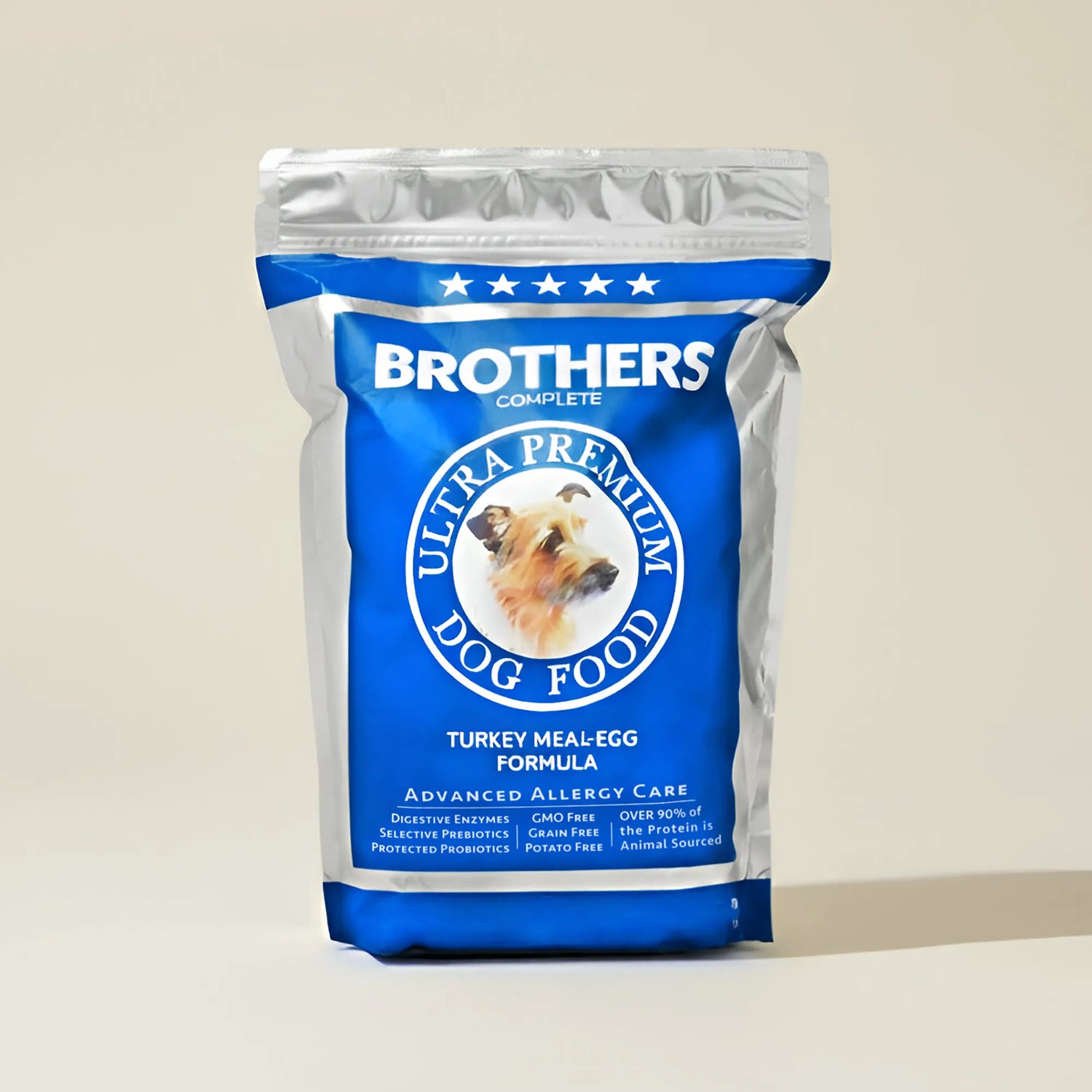
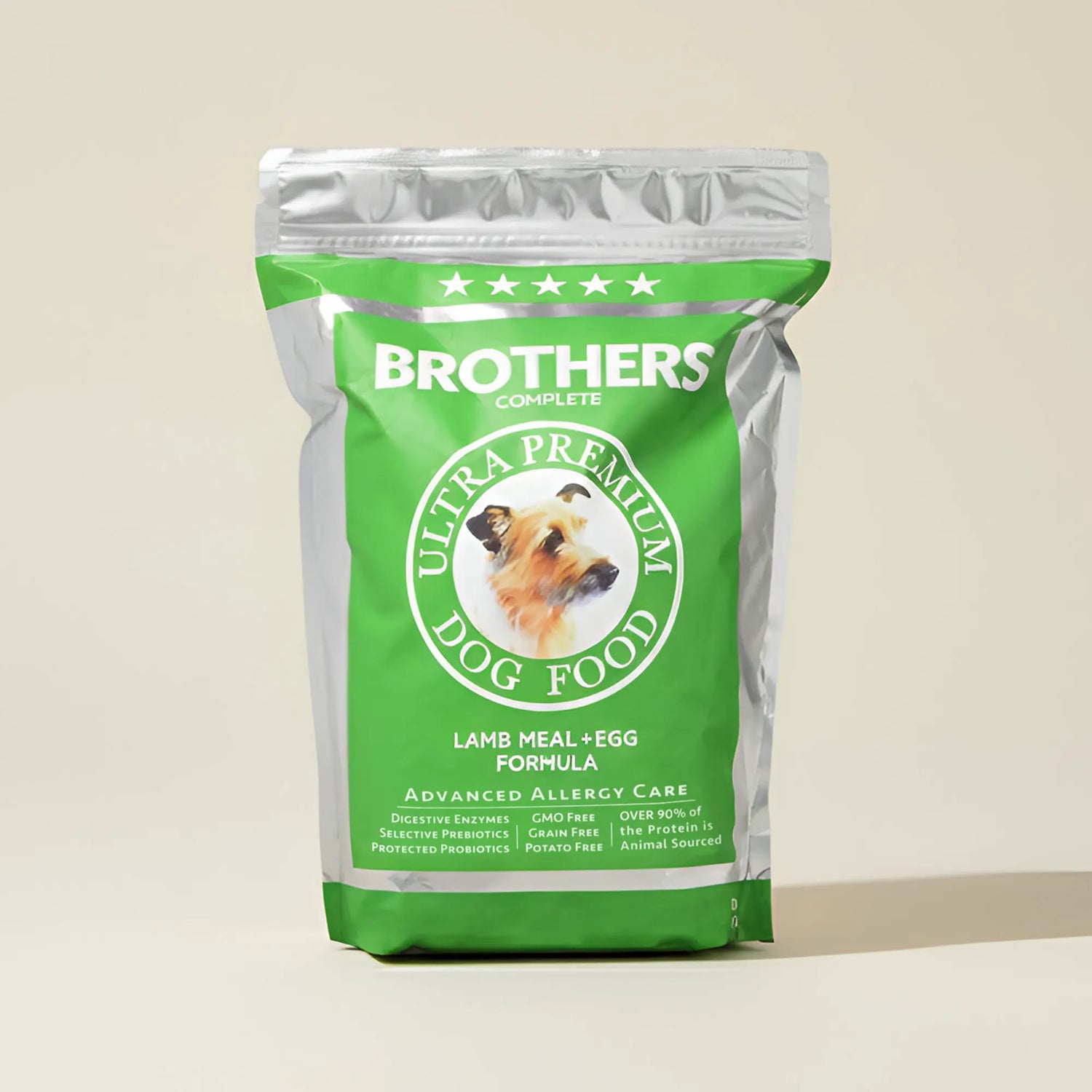
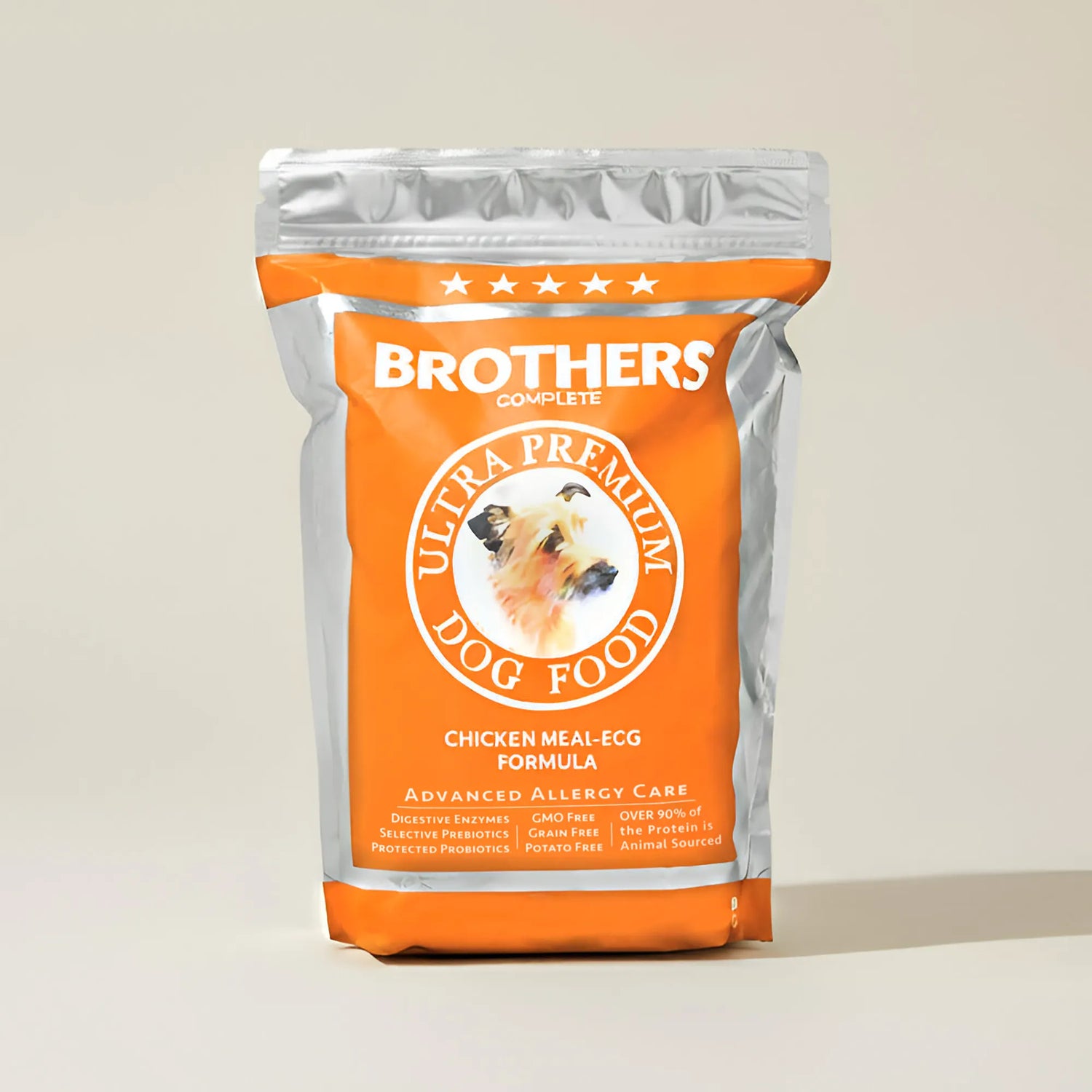
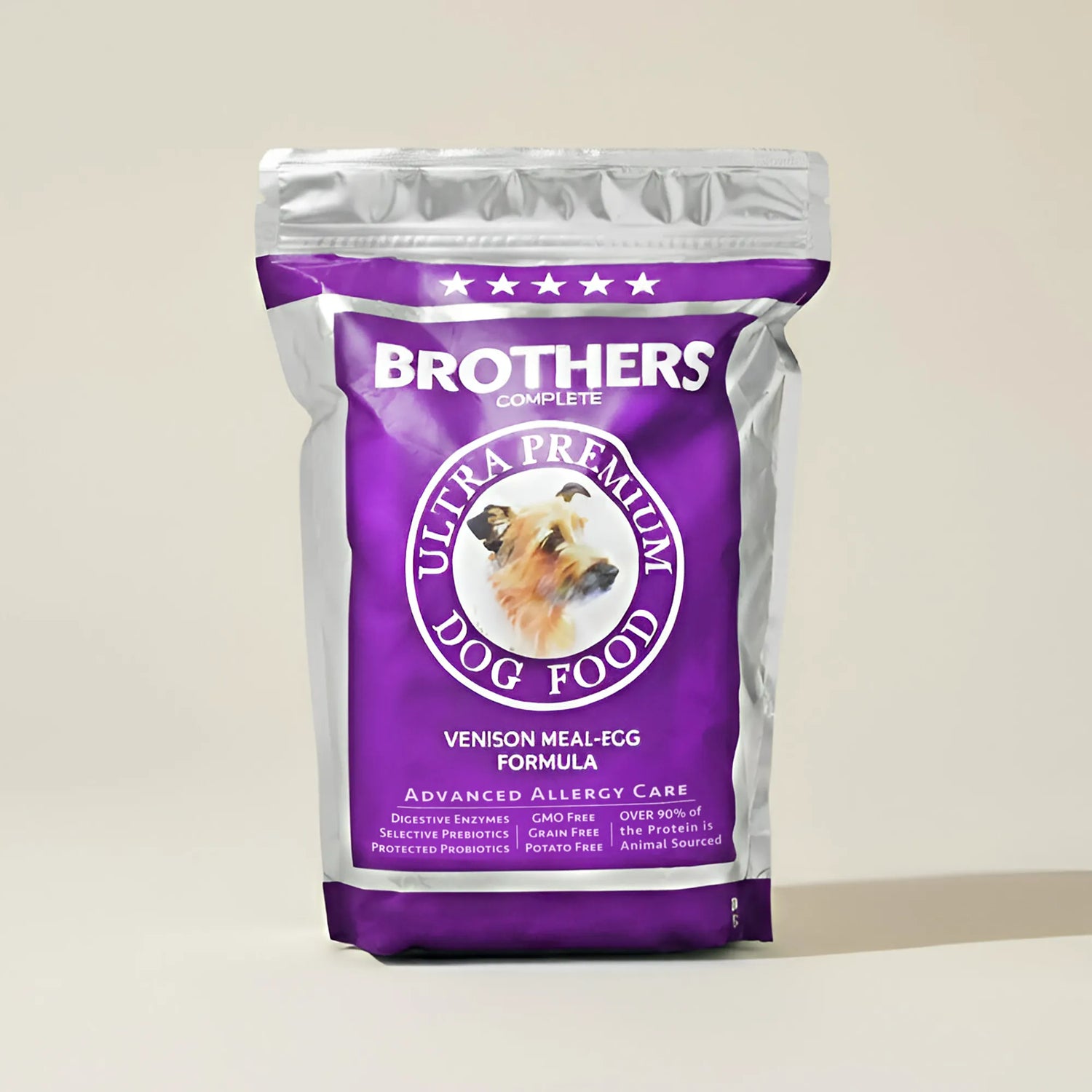
How Brothers Is Different From Other Dog Food for Newfoundlands
Most dog food, even formulas marketed as “large breed”, isn’t truly built for giant-breed physiology. A Newfoundland is not just a big dog; the slow-growth requirement, the cardiac predisposition, and the bloat risk create nutritional demands that generic large-breed formulas rarely address with real precision. For a breed where feeding mistakes can be costly, that gap matters.
What most dog food for Newfoundlands relies on:
- Calorie- and calcium-dense puppy formulas that push giant-breed puppies to grow too fast, stressing developing joints
- Plant-based protein fillers that inflate protein numbers without the complete animal amino acids, including taurine precursors, that support muscle and heart
- Low-quality, fermentable fillers that increase gas and gut fermentation, the last thing a bloat-prone breed needs
- Artificial additives and cheap fillers that burden digestion and contribute nothing to joint, heart, or gut health
Brothers focuses on digestibility, protein quality, and controlled growth, the three things that matter most for a Newfoundland.
What sets Brothers apart:
- Named animal protein first: chicken meal, turkey meal, lamb meal, or venison meal, natural sources of the taurine and complete amino acids that support heart and muscle
- Taurine guaranteed at a declared minimum on every panel, and L-carnitine in every recipe, so cardiac amino acids are accounted for by formulation rather than left to chance
- Balanced calories and controlled calcium that support steady, joint-protecting growth rather than maximum-speed growth
- High digestibility that reduces gut fermentation and supports a calmer digestive system in a bloat-prone breed
For a giant breed whose joints, heart, and gut depend on the details, ingredient quality isn’t a premium. It’s a baseline requirement.
Why Controlled Growth and Joint Health Are the #1 Priority for Newfoundlands
Newfoundland puppies grow from a few pounds to well over a hundred in their first year, one of the most dramatic growth curves in the dog world. That makes controlled, steady growth not just important but essential. Feeding a giant-breed puppy too many calories, or a formula with excess calcium, pushes growth faster than the developing skeleton can safely handle, and this is a documented cause of developmental orthopaedic disease. The counterintuitive truth for Newfie owners is that you do not want your puppy to grow as fast or as big as possible. You want it to grow slowly and soundly.
What giant-breed growth and joint health depend on:
- Controlled calcium and balanced calories in puppyhood. Steady growth produces the soundest joints and lowest dysplasia risk
- Quality animal protein that builds lean muscle to support and protect the joints carrying a heavy frame
- Omega-3s for ongoing anti-inflammatory joint support across a long life
- A lean body weight at every stage. Excess weight adds disproportionate load to joints already prone to dysplasia
Newfoundlands are prone to hip and elbow dysplasia, and their size means excess weight compounds the damage. Proactive joint-supportive nutrition works best when it starts in puppyhood, long before any symptoms appear, and a large- or giant-breed-appropriate diet with controlled calcium is the foundation of protecting those joints for life.
Heart Health in Newfoundlands
Newfoundlands carry a breed predisposition to heart conditions, most notably subaortic stenosis (a congenital narrowing below the aortic valve) and dilated cardiomyopathy. Because heart disease can progress with few early signs, heart-conscious nutrition and regular veterinary cardiac checks matter for this breed. While diet cannot override a genetic or congenital cardiac condition, nutrition plays a real supporting role, and it’s one more reason a Newfie’s food should be led by quality animal protein rather than plant fillers.
How nutrition supports a Newfoundland’s heart:
- Quality animal protein provides taurine and L-carnitine, amino acids important to cardiac muscle function
- Guaranteed taurine and added L-carnitine in every Brothers recipe, so cardiac amino acids are accounted for by formulation rather than left to the protein source alone
- Omega-3 fatty acids (DHA) offer anti-inflammatory and cardiac-supportive benefits
- A lean body weight reduces the workload on the heart, making weight control a direct cardiac benefit
You may also have seen headlines linking grain-free diets to heart disease. The FDA’s 2019 investigation identified a potential association, not an established cause, and the investigation remains open; the clearer signal was formulation quality, specifically diets where plant ingredients displaced animal protein. Our full breakdown is in Grain-Free Dog Food and Heart Disease. Watch for exercise intolerance, coughing, or fainting, signs worth a veterinary cardiac exam. Diet is not a treatment for heart disease, but a heart-conscious diet led by quality animal protein, rich in omega-3s, and built to keep a Newfoundland lean is a meaningful daily contribution alongside regular cardiac monitoring.
Bloat, Weight, and Digestive Comfort for Newfoundlands
As a large, deep-chested breed, the Newfoundland carries an elevated risk of bloat (gastric dilatation-volvulus, or GDV), a sudden, life-threatening condition in which the stomach fills with gas and can twist. Bloat is a veterinary emergency, and while no diet eliminates the risk, how you feed a Newfie meaningfully influences it. A highly digestible formula that doesn’t sit and ferment supports a calmer, healthier gut.
Bloat-conscious and weight-conscious feeding practices for Newfoundlands:
- Feed two or more smaller meals a day rather than one large meal. A smaller stomach volume per sitting is a core bloat-reduction strategy
- Slow down fast eaters with a slow-feeder bowl to reduce the air swallowed during rapid eating
- Avoid hard exercise around mealtimes. Wait before and after eating to let digestion begin calmly
- Keep the dog lean with appropriate calorie density. Excess weight strains both the joints and the heart
Recognising bloat is a life-saving skill for any Newfie owner: a distended or hard abdomen, unproductive retching, restlessness and pacing, drooling, and signs of distress are veterinary emergencies. Every Newfoundland household should know the nearest emergency vet before they ever need it. For dogs with a sensitive stomach, a clean, highly digestible formula with named animal protein keeps digestion steady.

Brothers Breeder Program
Breeder Program (For Newfoundland Breeders)
Brothers Dog Food proudly partners with Newfoundland breeders committed to producing healthy, well-nourished dogs. Our Breeder Program is built for professionals who understand that nutrition is the foundation of every healthy litter and every long-lived companion.
Newfoundland breeders interested in the Brothers Breeder Program can apply through the Brothers Breeder Program page or contact our team directly. We have active partnerships with breeders across the United States.
Why Newfoundland Parents Choose Brothers Dog Food
Newfoundland owners choose Brothers because it supports:
- Joint and hip health through omega-3s, quality protein, and weight control that protect the joints carrying an enormous frame
- Heart health with animal-protein-led, omega-3-rich nutrition, guaranteed taurine, and added L-carnitine for a breed with cardiac predispositions
- Healthy, controlled growth with balanced calories and calcium that support steady development in puppies
- Digestive comfort and bloat-conscious feeding with highly digestible, low-fermentation nutrition
- Coat and skin health with omega-3s that nourish the Newfie’s thick double coat
- Healthy weight for a calm giant that can gain weight and strain its joints and heart
If you’re looking for the best Newfoundland dog food, one designed with controlled growth, joint health, heart support, and bloat-conscious feeding in mind, Brothers delivers the ingredient quality this giant breed truly needs.
Shop Brothers Dog Food for Newfoundlands
Gentle giant. Big heart. Smarter nutrition—no compromises.
FAQs
Newfoundlands do best with a highly digestible formula led by named animal protein, with omega-3s for heart and joints, controlled calcium (especially for puppies), and balanced calories to keep the dog lean. Because Newfies are a deep-chested giant breed prone to bloat and carry cardiac predispositions, digestibility, heart-conscious protein quality, and feeding practices matter as much as the ingredient list. Look for a large- or giant-breed-appropriate formula and avoid calorie-dense fillers.
Adult Newfoundlands typically eat two or more measured meals per day, with the amount based on body condition rather than the bag guideline. Despite their size, Newfies are calm and can gain weight easily, so many are overfed. A healthy Newfoundland should have a palpable ribcage and a visible waist, which the thick coat can hide, so check by hand. Split the daily amount into two or more meals rather than one large feeding to help manage bloat risk, and adjust as activity and life stage change.
Newfoundland puppies need a large- or giant-breed-appropriate formula with controlled calcium and balanced calories to ensure steady, not rapid, growth, one of the most important nutritional decisions for the breed. Growing too fast stresses developing joints and is a documented cause of orthopaedic disease in giant breeds. Do not feed for maximum size or over-supplement calcium; steady growth produces the soundest joints. Prioritise quality animal protein and DHA, feed multiple smaller meals per day, and introduce any new food gradually over 7 to 10 days.
No approach eliminates bloat risk, but several feeding practices meaningfully reduce it in deep-chested giant breeds. Feed two or more smaller meals per day rather than one large meal; slow down fast eaters with a slow-feeder bowl; avoid vigorous exercise for about an hour before and after meals; and choose a highly digestible, low-fermentation formula that produces less gas. Learn the signs of bloat, a distended or hard abdomen, unproductive retching, restlessness, and drooling, and know your nearest emergency vet in advance, because bloat progresses within hours and is a surgical emergency.
Newfoundlands carry a breed predisposition to cystinuria, a genetic condition that can lead to cystine bladder stones, particularly in males. If your Newfoundland is diagnosed with cystinuria or a history of stones, diet and hydration become part of medical management; your veterinarian may recommend specific adjustments, and increasing water intake is important. For Newfies without this diagnosis, a clean, high-quality, highly digestible diet with adequate hydration supports general urinary and whole-body health. Always follow veterinary guidance for a dog with a confirmed urinary condition.

We are a premium dog food brand founded on the gut-immune connection - balancing protein quality, low glycemic carbs, and gut support - made by a family who’s dedicated their lives to solving chronic canine health problems.
We are a premium dog food brand founded on the gut-immune connection - balancing protein quality, low glycemic carbs, and gut support - made by a family who’s dedicated their lives to solving chronic canine health problems.