


Best Dog Food for Great Danes


Great Danes are gentle giants — among the tallest, most striking dogs in the world, with hearts to match their size. But that enormous frame comes with giant-breed health realities that make nutrition genuinely high-stakes. Great Danes carry the highest risk of bloat (gastric dilatation-volvulus) of any breed, a sudden and often fatal condition where how and what you feed makes a real difference. Their puppies must grow slowly and carefully to protect developing joints. And their shorter-than-average lifespan means every year of good nutrition counts. For a Great Dane, feeding well isn’t about quantity — it’s about getting the details right.
The right food is highly digestible to support a bloat-prone gut, delivers quality protein for lean giant-breed muscle, and controls calories and calcium carefully for steady growth and healthy joints. Brothers Dog Food is built around exactly those priorities — clean, functional nutrition scaled for a dog with the biggest needs of all.
Why Brothers Dog Food is a great option for Great Danes:
- Highly digestible nutrition supports a healthy gut and reduces the fermentation and gas that matter for a breed at the highest bloat risk
- Supports healthy digestion and gut balance, a genuine priority for a deep-chested giant breed
- Quality animal protein builds and maintains lean muscle on a massive frame without the excess that strains joints
- Supports joint health with omega-3s and quality protein to protect against the hip and joint issues giant breeds are prone to
- Balanced calories and controlled calcium support the steady, slow growth that giant-breed puppies require to develop sound joints
- Omega-3 fatty acids (DHA) support heart, joints, skin, and coat in a breed with cardiac and orthopedic vulnerabilities
- Made without unnecessary fillers and artificial additives that burden digestion and offer no benefit to a giant breed’s health
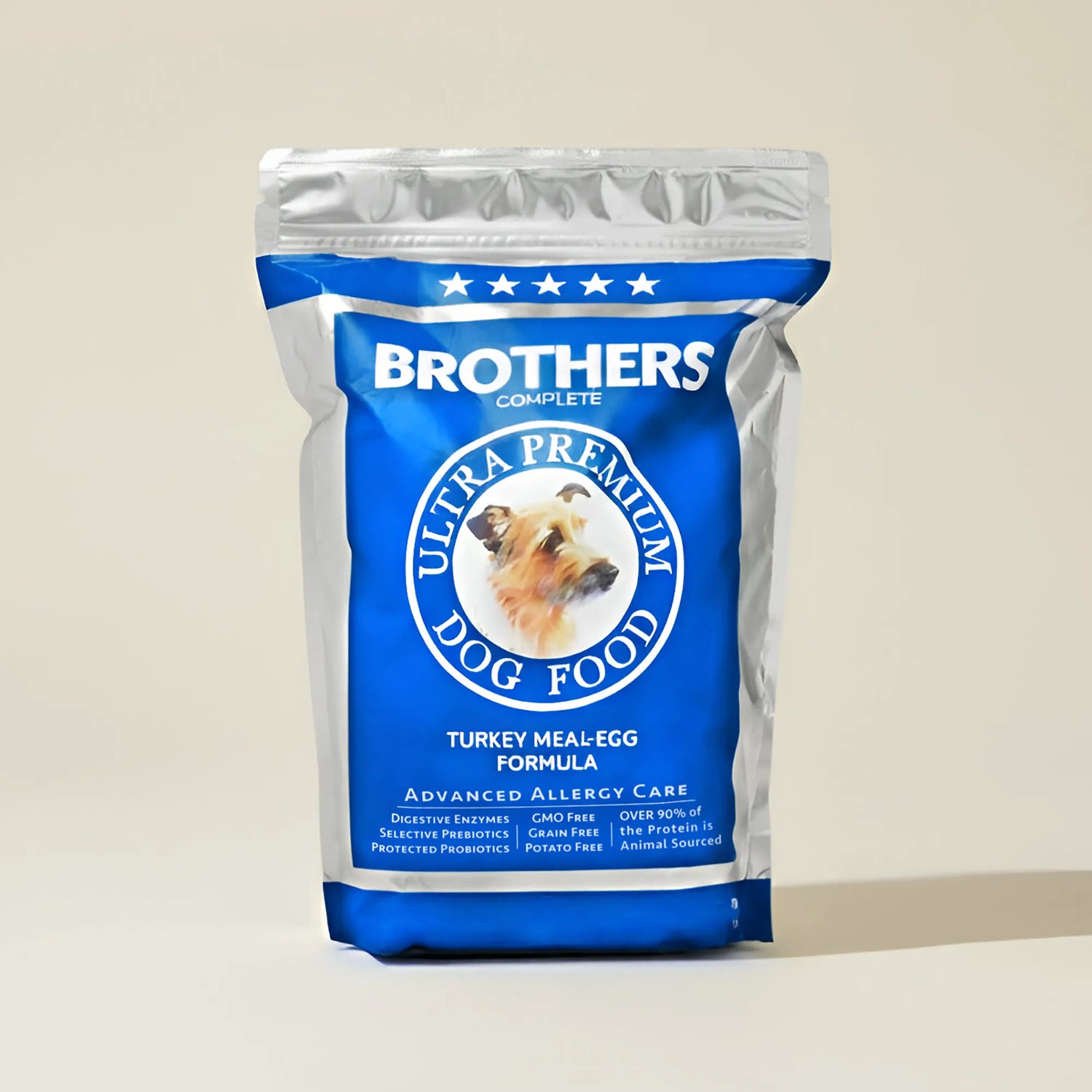
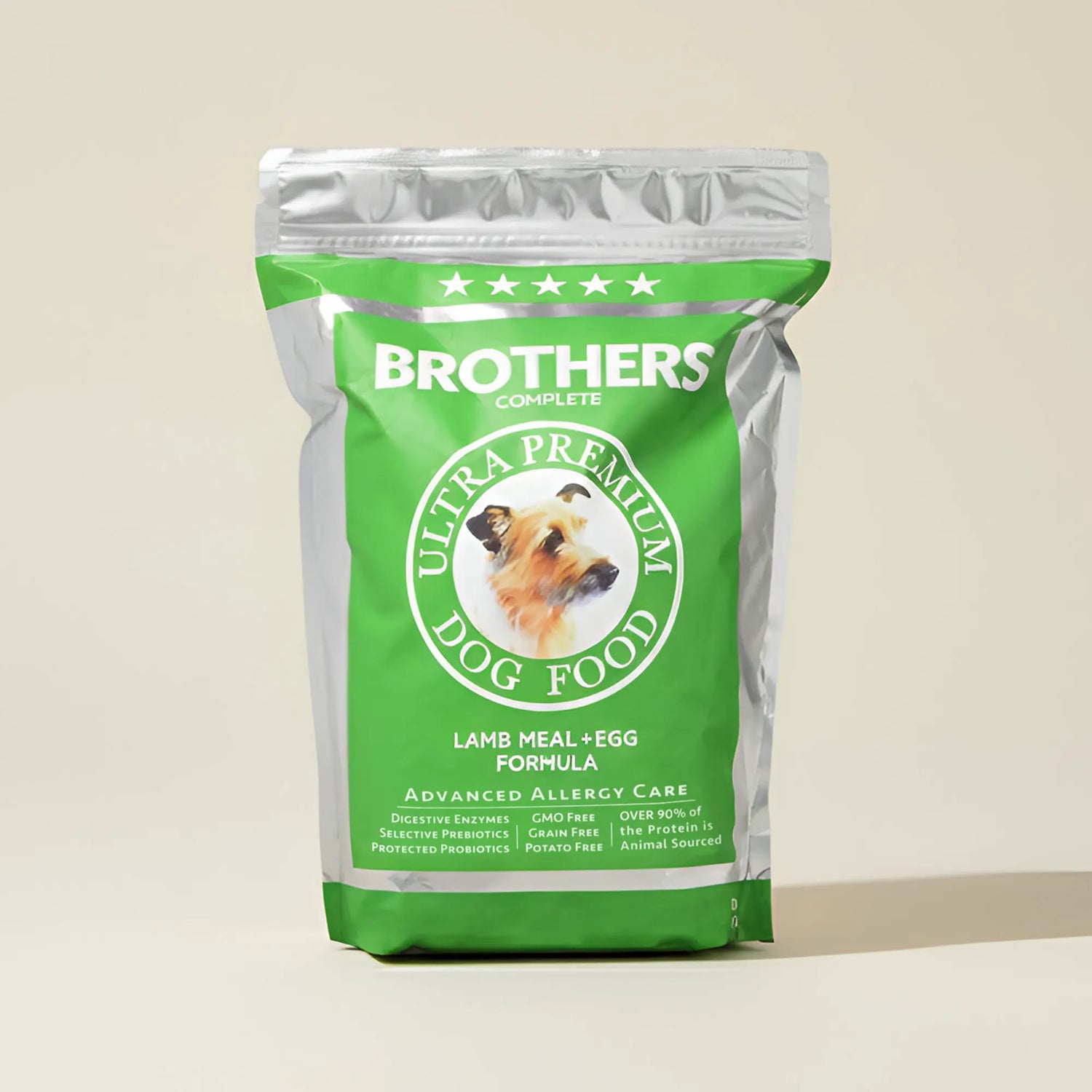
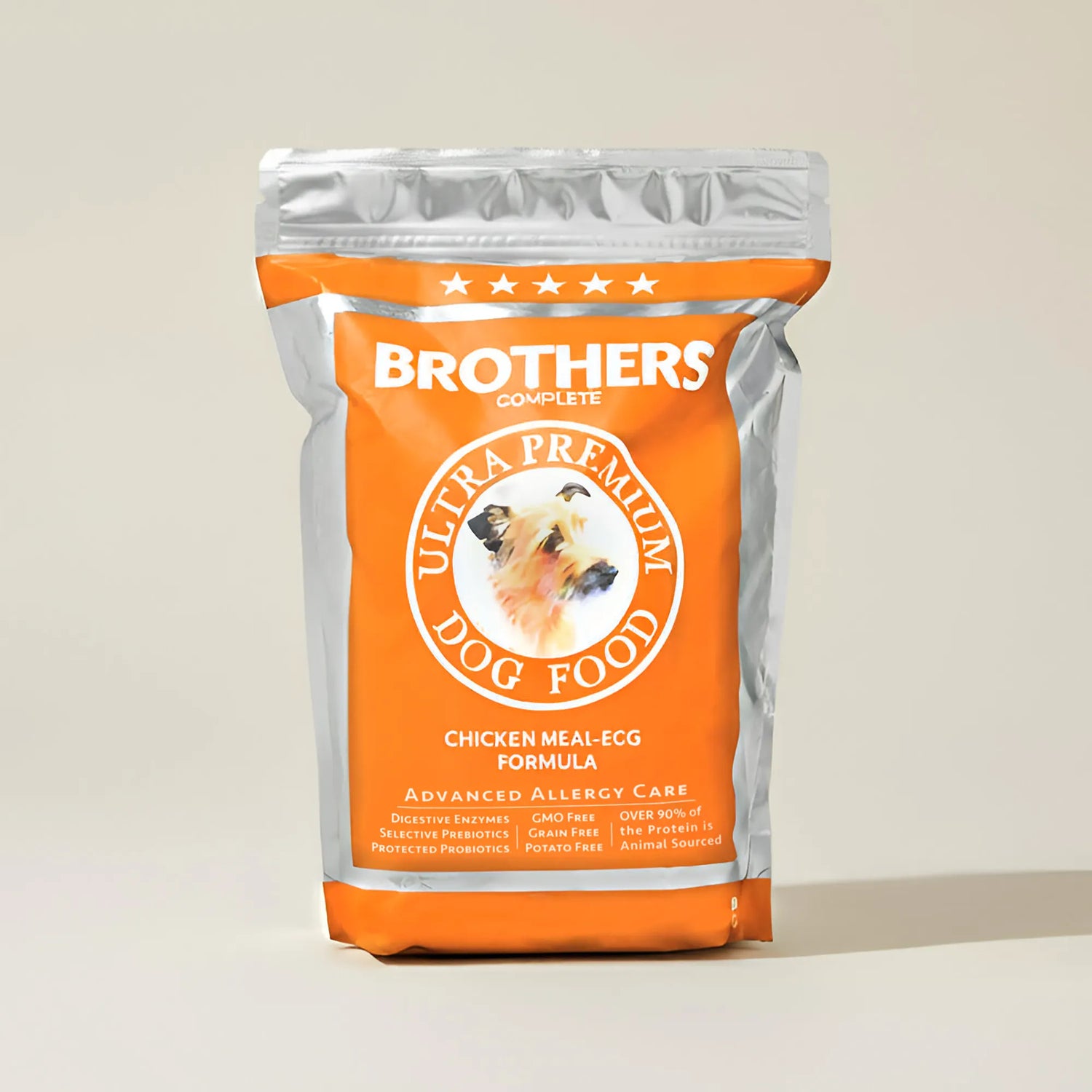
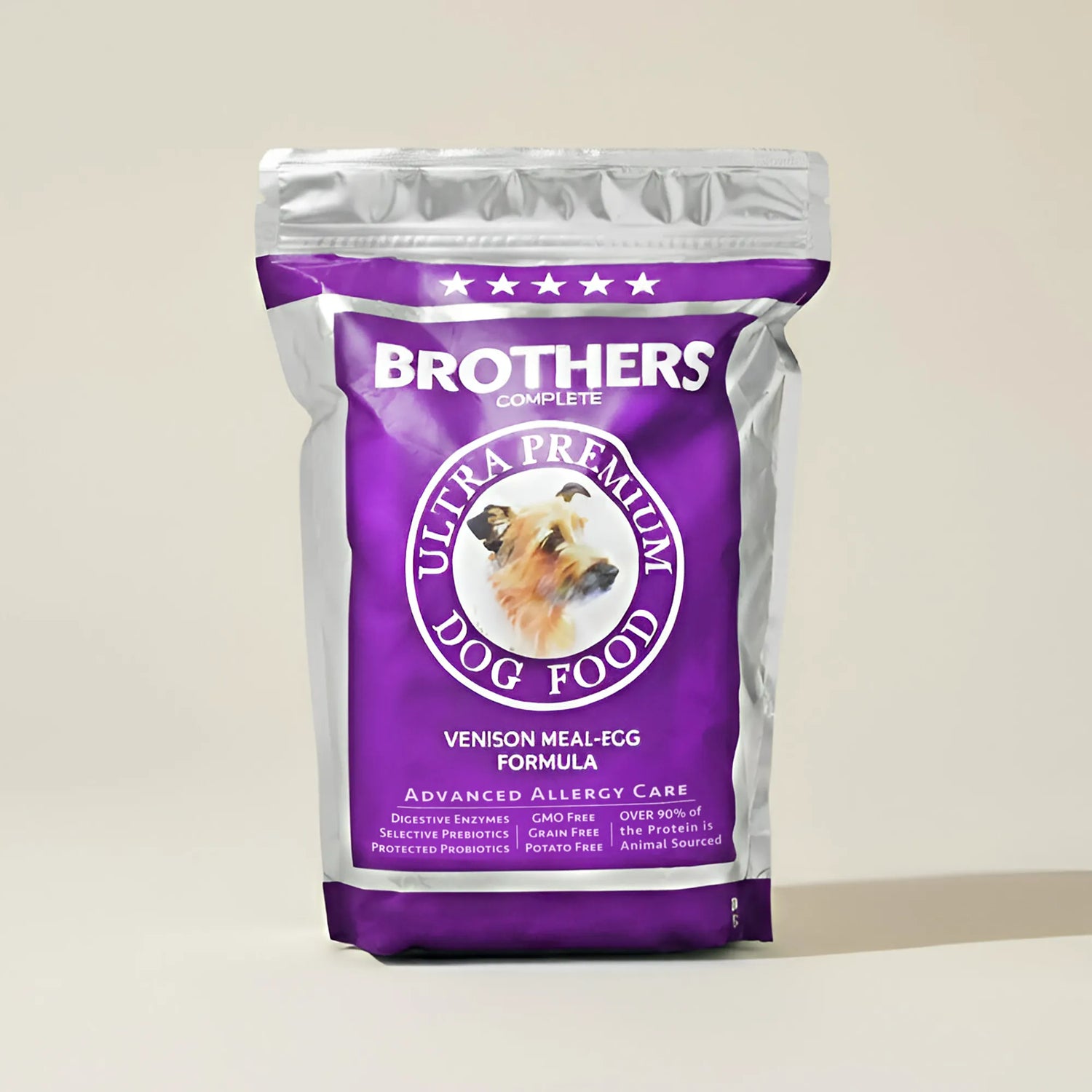
How Brothers Is Different From Other Great Dane Dog Food
Most dog food, even large-breed formulas, isn’t truly built for giant-breed physiology. A Great Dane is not just a big dog; the bloat risk, the slow-growth requirement, and the sheer scale of the frame create nutritional demands that generic ‘large breed’ formulas rarely address with real precision. For a breed where feeding mistakes can be fatal, that gap matters enormously.
What most dog food for Great Danes relies on:
- Low-quality, fermentable fillers that increase gas and gut fermentation — the last thing a bloat-prone giant breed needs
- Calorie- and calcium-dense puppy formulas that push giant-breed puppies to grow too fast, stressing developing joints
- Plant-based protein fillers that inflate protein numbers without the complete amino acids that build and preserve lean muscle
- Artificial additives and preservatives that burden digestion and contribute nothing to joint, heart, or gut health
What sets Brothers apart:
- Named animal protein first: chicken meal, turkey meal, lamb meal, or venison meal, for complete amino acids that build lean muscle on a giant frame
- High digestibility that reduces gut fermentation and supports a calmer, healthier digestive system in a bloat-prone breed
- Balanced calories and controlled calcium that support steady, joint-protecting growth rather than maximum-speed growth
- Marine omega-3s and clean ingredients that support long-term health and help every year count for a shorter-lived giant breed
Bloat (GDV): The #1 Feeding Priority for Great Danes
Bloat, or gastric dilatation-volvulus (GDV), is the single greatest health threat to Great Danes. The breed carries the highest lifetime bloat risk of any dog. In bloat, the stomach fills rapidly with gas and can rotate on itself, cutting off blood flow. It progresses within hours, is frequently fatal without emergency surgery, and strikes a deep-chested giant breed far more often than any other body type. For Great Dane owners, understanding bloat and feeding to reduce its risk is the most important nutritional responsibility they carry.
While no diet or routine eliminates bloat risk entirely, feeding practices meaningfully influence it, and this is where nutrition and daily habits intersect. A highly digestible, clean formula that doesn’t sit and ferment in the gut supports a calmer digestive system. Just as important is how the food is fed: smaller, more frequent meals rather than one large meal, avoiding rapid gulping, and not exercising hard immediately before or after eating are all standard, evidence-informed precautions for reducing bloat risk in giant breeds.
Bloat-conscious feeding practices for Great Danes:
- Feed two to three smaller meals a day rather than one large meal — a smaller stomach volume per sitting is a core bloat-reduction strategy
- Slow down fast eaters with a slow-feeder bowl or feeding method to reduce the air swallowed during rapid eating
- Avoid hard exercise around mealtimes. Wait before and after eating to let digestion begin calmly
- Choose a highly digestible, low-fermentation formula that produces less gas and supports a stable gut
Recognizing bloat is a life-saving skill for any Great Dane owner: a distended or hard abdomen, unproductive retching or attempts to vomit, restlessness and pacing, drooling, and signs of distress are veterinary emergencies. Every Great Dane household should know the nearest emergency vet before they ever need it. Nutrition supports prevention; awareness saves lives.
Giant-Breed Growth and Joints: Why Great Dane Puppies Must Grow Slowly
Great Dane puppies grow from a few pounds to well over a hundred in their first year — one of the most dramatic growth curves in the dog world. That makes controlled, steady growth not just important but essential. Feeding a giant-breed puppy too many calories, or a formula with excess calcium, pushes growth faster than the developing skeleton can safely handle, and this is a documented cause of developmental orthopedic disease. The counterintuitive truth for Great Dane owners is that you do not want your puppy to grow as fast or as big as possible. You want it to grow slowly and soundly.
A large- or giant-breed-appropriate puppy diet with controlled calcium and balanced calories is the foundation. Into adulthood, maintaining a lean body condition protects the joints that carry an enormous frame, and joint-supportive nutrition with omega-3s helps manage the hip, elbow, and cervical (wobbler) vulnerabilities giant breeds face. Because size and life stage strongly affect a Great Dane’s nutritional needs, feeding should adjust deliberately across puppy, adult, and senior stages.

Brothers Breeder Program
Breeder Program (For Great Dane Breeders)
Brothers Dog Food proudly partners with Great Dane breeders committed to producing healthy, well-nourished dogs. Our Breeder Program is built for professionals who understand that nutrition is the foundation of every healthy litter and every long-lived companion.
Great Dane breeders interested in the Brothers Breeder Program can apply through the Brothers Breeder Program page or contact our team directly. We have active partnerships with breeders across the United States.
Why Great Dane Parents Choose Brothers Dog Food
Great Dane owners choose Brothers because it supports:
- Digestive health and bloat-conscious feeding with highly digestible, low-fermentation nutrition for the breed at highest bloat risk
- Healthy giant-breed growth with controlled calories and calcium that support steady, joint-protecting development in puppies
- Joint health through omega-3s, quality protein, and weight control that protect the joints carrying an enormous frame
- Lean muscle with high-quality animal protein that maintains a strong, sound giant-breed physique
- Heart, skin, and coat health supported by omega-3s and clean, functional ingredients
- Long-term wellness — clean nutrition that helps every year count for a shorter-lived breed
Shop Brothers Dog Food for Great Danes
Giant frame. Giant needs. Nutrition built for the details that matter—no compromises.
FAQs
Great Danes do best with a highly digestible formula led by named animal protein, with marine omega-3s for joints and heart, controlled calcium (especially for puppies), and balanced calories to keep the dog lean. Because Great Danes have the highest bloat risk of any breed, digestibility and feeding practices matter as much as the ingredient list. Brothers is built around exactly this: clean, digestible, animal-protein-led nutrition for a giant breed with high-stakes needs.
No approach eliminates bloat risk, but several feeding practices meaningfully reduce it in giant breeds. Feed two to three smaller meals per day rather than one large meal; slow down fast eaters with a slow-feeder bowl; avoid vigorous exercise for about an hour before and after meals; and choose a highly digestible, low-fermentation formula that produces less gas. Learn the signs of bloat — a distended or hard abdomen, unproductive retching, restlessness, and drooling — and know your nearest emergency vet in advance, because bloat progresses within hours and is a surgical emergency.
Great Dane puppies need a large- or giant-breed-appropriate formula with controlled calcium and balanced calories to ensure steady, not rapid, growth. This is one of the most important nutritional decisions for the breed. Growing too fast stresses developing joints and is a documented cause of orthopedic disease in giant breeds. Do not feed for maximum size or over-supplement calcium; steady growth produces the soundest joints. Prioritize quality animal protein and DHA, feed multiple smaller meals per day, and introduce any new food gradually over 7 to 10 days.
Adult Great Danes typically need roughly 2,500 to 3,500 calories per day depending on size, sex, age, and activity — among the highest of any breed simply due to their scale. Use body condition rather than the bag guideline as your guide: a healthy Great Dane is lean, with a palpable ribcage and a visible waist. Critically, split the daily amount into two or three meals rather than one large feeding to help manage bloat risk. Measure by weight, feed on a consistent schedule, and adjust as activity and life stage change.
Many Great Danes have sensitive digestion, and because the breed is so bloat-prone, gut health is a heightened priority. A highly digestible, limited-ingredient formula with clean carbohydrate sources and no artificial additives is the dietary foundation for a stable giant-breed gut. Prebiotic fiber supports microbiome balance and stool consistency. Consistency matters. Transition any new food slowly over 7 to 10 days, and once a formula is working, keep it stable, since abrupt changes disrupt digestion and add unnecessary gut stress to a bloat-prone breed.

We are a premium dog food brand founded on the gut-immune connection - balancing protein quality, low glycemic carbs, and gut support - made by a family who’s dedicated their lives to solving chronic canine health problems.
We are a premium dog food brand founded on the gut-immune connection - balancing protein quality, low glycemic carbs, and gut support - made by a family who’s dedicated their lives to solving chronic canine health problems.