


Best Dog Food for Dobermans


Dobermans are sleek, powerful, athletic dogs — elegant guardians with the muscle and endurance of a true working breed. But behind that impressive physique is a health reality every Doberman owner should take seriously: the Doberman Pinscher has the highest rate of dilated cardiomyopathy (DCM) of any dog breed. Heart disease is the leading cause of death in the breed, which makes cardiac-supportive nutrition not a nice-to-have but a genuine priority. For a Doberman, what goes in the bowl has a direct line to the health of the heart.
The right food supports heart function with quality animal protein and the amino acids cardiac muscle depends on, fuels the breed’s lean frame with high-quality protein, and stays clean and highly digestible for an athletic, sometimes sensitive-stomached breed. Brothers Dog Food is built around exactly those priorities — every recipe is led by named animal protein, guarantees taurine on the panel, and includes L-carnitine.
Why Brothers Dog Food is a great option for Dobermans:
- Supports heart health with guaranteed taurine and added L-carnitine in every recipe — the two amino acids most associated with canine cardiac muscle function — plus omega-3s, for a breed with the highest DCM risk of any
- Quality animal protein at 30% to 36% crude protein builds and maintains the lean, athletic muscle a Doberman’s frame depends on
- Over 90% animal protein, so the amino acids that support heart and muscle come from named animal sources rather than plant fillers
- Omega-3 DHA from whole cell algae supports heart, joints, and skin and coat in an athletic working breed
- Supports joint health with omega-3s and quality protein to protect against the hip and joint issues this large, active breed can develop
- Promotes healthy digestion and gut balance for a deep-chested breed that can be sensitive-stomached and is at risk of bloat
- Clean novel-protein options for Dobermans with food allergies and skin sensitivities
- Made without unnecessary fillers and artificial additives that add inflammatory burden and no benefit to an athletic working dog
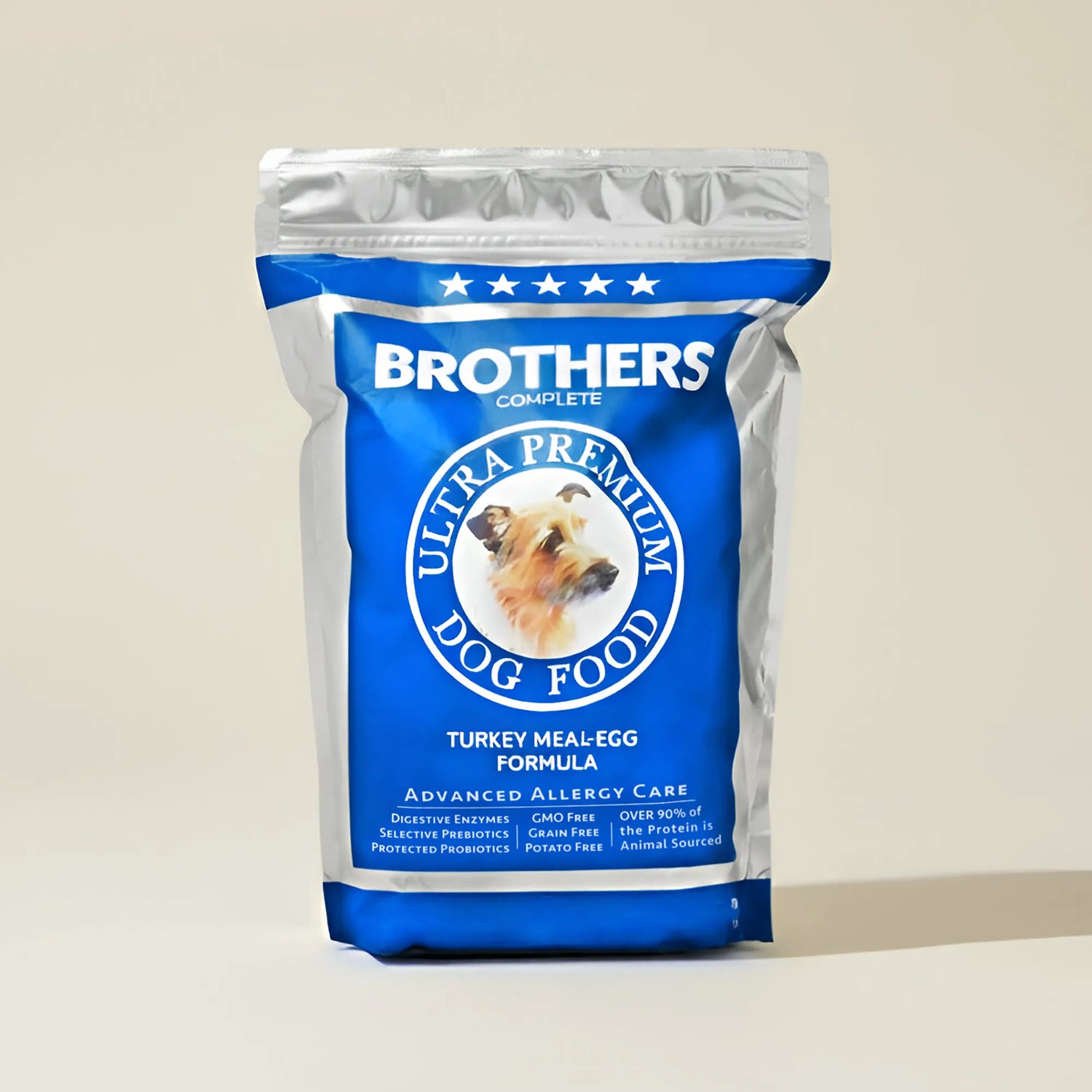
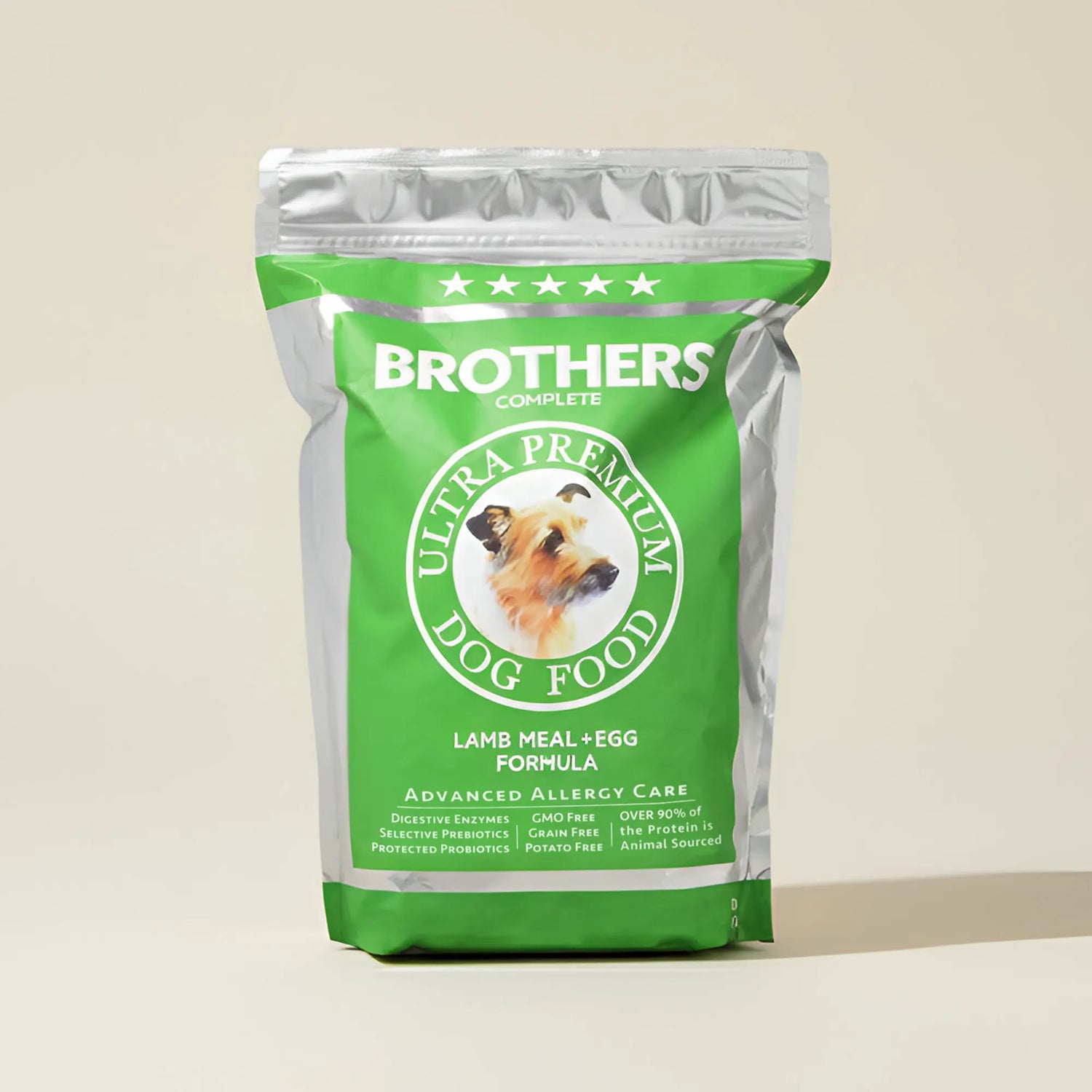
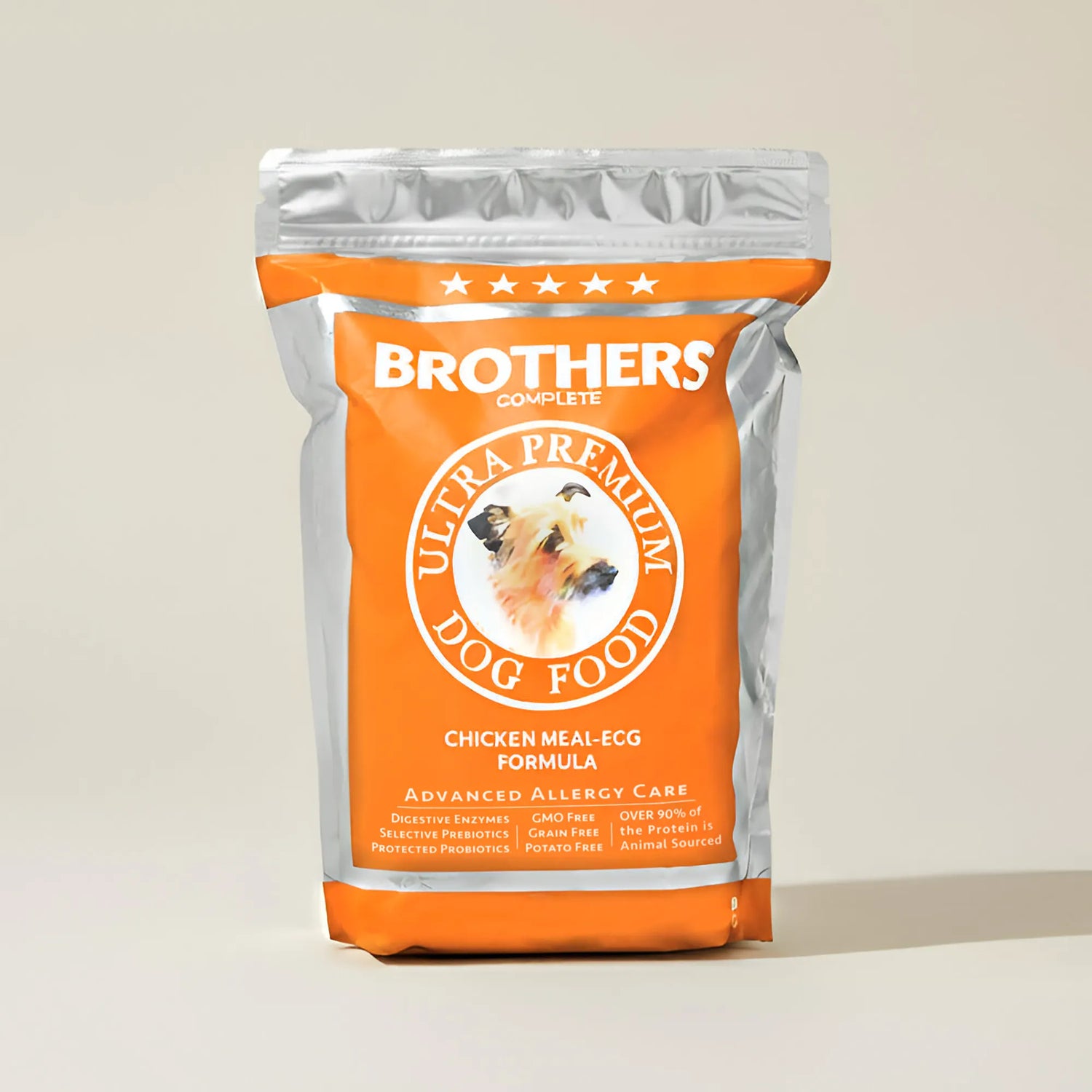
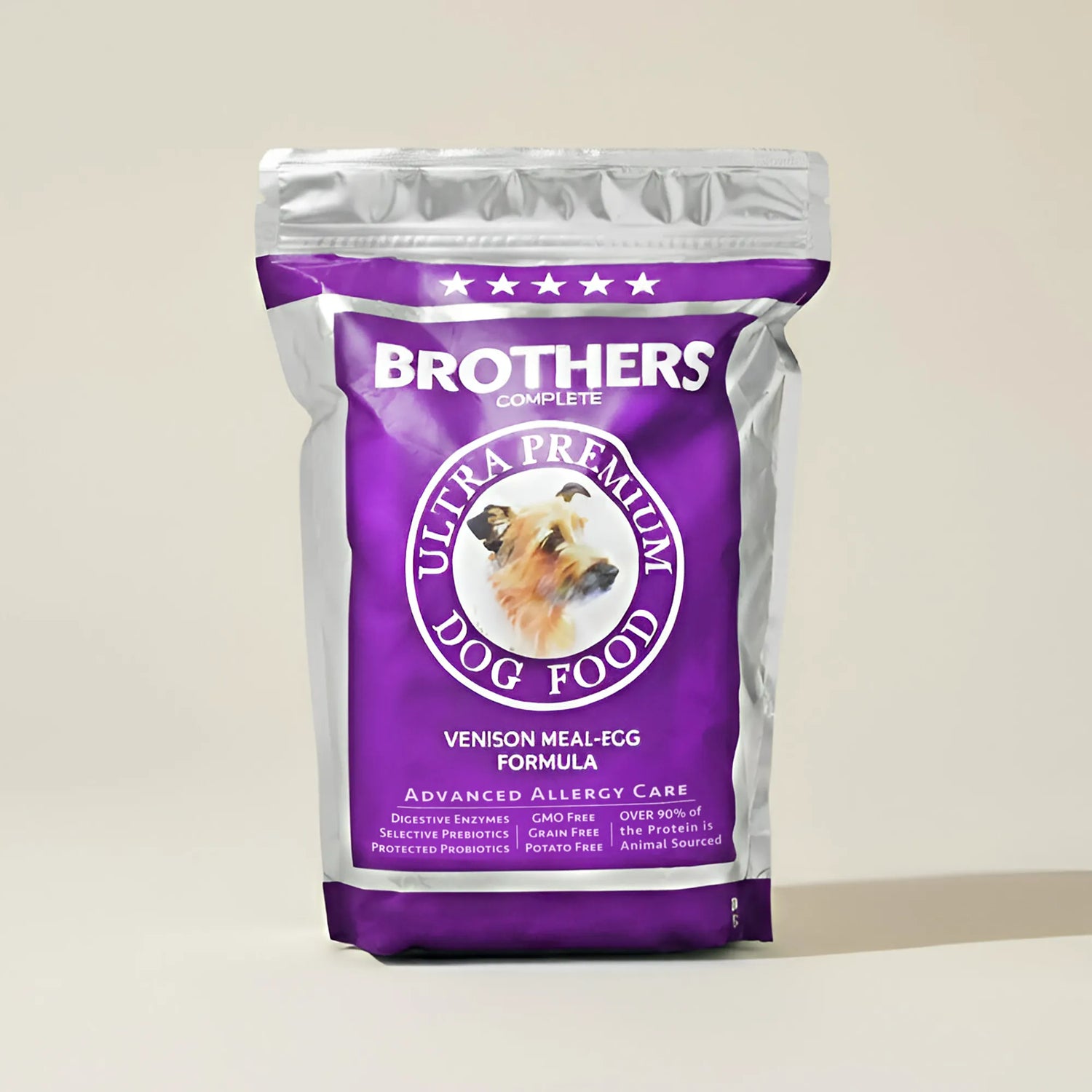
How Brothers Is Different From Other Doberman Dog Food
Most dog food, even premium and large-breed formulas, is built around palatability and trends rather than the cardiac and metabolic realities that define a Doberman. For a breed where heart disease is the leading killer, the ingredient deck is not a marketing detail. It is a health decision.
What most dog food for Dobermans relies on:
- Plant-based protein fillers that inflate protein numbers without the complete amino acids, including taurine precursors, that support heart and muscle
- No guaranteed taurine and no added L-carnitine, leaving cardiac amino acid support entirely to whatever the protein source happens to provide
- Calorie-dense, low-quality bases that promote weight gain and add strain to a heart already under breed-specific pressure
- Artificial additives and preservatives that burden digestion and offer nothing to cardiac, joint, or muscle health
What sets Brothers apart:
- Named animal protein first: chicken meal, turkey meal, lamb meal, or venison meal, natural sources of the taurine and L-carnitine that support cardiac muscle
- Taurine guaranteed at a declared minimum on every panel, and L-carnitine in every recipe — cardiac amino acids accounted for by formulation, not left to chance
- Omega-3 DHA from whole cell algae for heart, joint, skin, and coat support, not a trace addition
- Clean, digestible ingredients that support long-term health across an athletic breed’s demanding life
Dilated Cardiomyopathy (DCM): The #1 Dietary Priority for Dobermans
Dilated cardiomyopathy is the defining health threat of the Doberman breed. In DCM, the heart muscle weakens and enlarges, losing its ability to pump blood effectively, which can lead to heart failure and sudden death. Dobermans are affected at higher rates than any other breed. Studies estimate a large percentage of the breed will develop DCM over their lifetime, often with few outward signs until the disease is advanced. This is why cardiac screening (echocardiogram and Holter monitoring) is a standard veterinary recommendation for the breed, and why nutrition that supports the heart matters from day one.
Diet cannot override the genetic component of Doberman DCM, but nutrition plays a real supporting role in cardiac health. Taurine and L-carnitine are amino acids essential to heart muscle function, and they are found in meaningful amounts in high-quality animal protein — one more reason a Doberman’s food should be led by named animal sources rather than plant proteins. Omega-3 fatty acids (EPA and DHA) have demonstrated anti-arrhythmic and anti-inflammatory benefits supportive of cardiac health. Every Brothers recipe guarantees taurine at a declared minimum, includes L-carnitine, and carries omega-3 DHA from whole cell algae.
You have probably also seen headlines linking grain-free diets to DCM. The FDA’s 2019 investigation identified a potential association, not an established cause, and the investigation remains open. Most reported cases occurred in breeds not genetically predisposed to DCM, which pointed the question at how specific formulas were built rather than at grain-free food as a category. Brothers answers that question directly: over 90% of the protein comes from named animal sources rather than plant protein, and taurine and L-carnitine are accounted for in every recipe. Our full breakdown of the research is in Grain-Free Dog Food and Heart Disease: Separating Science from Scare Tactics.
Warning signs of cardiac involvement in a Doberman, any of which warrant immediate veterinary evaluation:
- Exercise intolerance, tiring quickly or reluctance to do activity the dog previously handled easily
- Coughing or labored breathing, especially at rest or when lying down
- Fainting or collapse, particularly during or after exertion, a red-flag cardiac symptom
- Weakness, lethargy, or a distended abdomen that may indicate advancing heart disease
Diet is not a treatment for DCM, and annual cardiac screening from age two remains the standard of care. But a heart-conscious diet, led by animal protein and rich in omega-3s, is the most accessible daily contribution a Doberman owner can make to their dog’s cardiac health.
Muscle, Joints, and Large-Breed Feeding for Dobermans
Beyond the heart, the Doberman is a lean, athletic, muscular breed whose physique depends on sustained high-quality protein. For active dogs, protein at or above 30% from named animal sources builds and maintains the muscle that defines the breed and supports the joints beneath it. Every Brothers recipe meets that mark, running from 30% to 36% crude protein. Dobermans can be prone to hip issues and to cervical vertebral instability (wobbler syndrome), and maintaining a lean body weight plus joint-supportive nutrition is the most impactful way to protect their structure over a long, active life.
As a large, deep-chested breed, Dobermans also carry an elevated bloat (GDV) risk, so feeding practices matter: two or more smaller meals a day rather than one large one, no hard exercise right around mealtimes, and a highly digestible formula that doesn’t sit and ferment. Puppies need a large-breed-appropriate diet with controlled calcium and balanced calories for steady, joint-protecting growth. Owners should also be aware of the breed’s separate genetic risks, von Willebrand’s disease (a bleeding disorder) and hypothyroidism, as veterinary topics distinct from diet.

Brothers Breeder Program
Breeder Program (For Doberman Breeders)
Brothers Dog Food proudly partners with Doberman breeders committed to producing healthy, well-nourished dogs. Our Breeder Program is built for professionals who understand that nutrition is the foundation of every healthy litter and every long-lived companion.
Doberman breeders interested in the Brothers Breeder Program can apply through the Brothers Breeder Program page or contact our team directly. We have active partnerships with breeders across the United States.
Why Doberman Parents Choose Brothers Dog Food
Doberman owners choose Brothers because it supports:
- Heart health with animal-protein-led, omega-3-rich nutrition, guaranteed taurine, and added L-carnitine in a breed at the highest cardiac risk
- Lean muscle and strength through high-quality animal protein that builds and maintains the breed’s athletic frame
- Joint health via omega-3s, quality protein, and weight control for a large, active breed
- Digestive comfort and gut health. Clean, digestible nutrition for a deep-chested breed prone to sensitivity and bloat
- Healthy weight that keeps strain off both the heart and the joints
- Skin and coat health supported by omega-3s and clean, functional ingredients
Shop Brothers Dog Food for Dobermans
Athletic build. Vulnerable heart. Nutrition that protects both. No compromises.
FAQs
Dobermans do best with a high-protein, highly digestible formula led by named animal protein, a natural source of the taurine and L-carnitine that support heart muscle, with marine omega-3s for cardiac, joint, and coat health. Because the breed carries the highest DCM risk of any dog, look for a formula that accounts for cardiac amino acids by design rather than leaving them to chance. Brothers is built around exactly this: animal-protein-led recipes at 30% to 36% crude protein, taurine guaranteed on every panel, L-carnitine in every recipe, and omega-3 DHA from whole cell algae.
For Doberman heart health, prioritize a formula led by high-quality animal protein, which supplies taurine and L-carnitine, the amino acids essential to cardiac muscle, and meaningful marine omega-3 content (EPA and DHA have anti-arrhythmic and anti-inflammatory benefits). Better still is a food that guarantees taurine on the panel rather than relying on the protein source alone, which is what Brothers does across all four recipes. On the grain-free question: the FDA identified a potential association with DCM in 2019, not an established cause, and the investigation remains open. The clearer signal was formulation quality, so choose a food where animal protein leads. Diet supports the heart but does not replace cardiac screening; annual echocardiogram and Holter monitoring from age two is the standard of care.
Adult Dobermans typically need roughly 1,600 to 2,300 calories per day depending on size, sex, age, and activity level, with working and highly active dogs at the higher end. Use body condition rather than the bag guideline as your real guide: a healthy Doberman is lean and athletic, with a palpable ribcage and a clearly visible waist. Feed two measured meals per day rather than one large meal, both to help manage the breed’s bloat risk and to support steadier digestion. Keep the dog lean, since excess weight strains both the heart and the joints.
Doberman puppies need a large-breed-appropriate formula with controlled calcium and balanced calories for steady, not rapid, growth, which protects developing joints in a large, fast-growing breed. Prioritize quality animal protein for lean muscle and DHA for neural development. Feed three meals daily through about 6 months, then transition to twice daily, and introduce any new food gradually over 7 to 10 days. Starting on a clean, animal-protein-led diet in puppyhood also sets a heart-conscious foundation for a breed that will need it lifelong.
Both occur in the breed. Food sensitivities show up as chronic itching, hot spots, recurrent ear infections, and a dull coat, while sensitive digestion appears as loose stools or intermittent GI upset. A clean, highly digestible formula with named animal protein and no artificial additives is the dietary foundation. For confirmed allergies, a novel single-protein elimination diet run strictly for 8 to 12 weeks is the diagnostic standard. For Dobermans specifically, keep cardiac health in view while you work through it and stay with an animal-protein-led food. Marine omega-3s support skin and coat at the same time.

We are a premium dog food brand founded on the gut-immune connection - balancing protein quality, low glycemic carbs, and gut support - made by a family who’s dedicated their lives to solving chronic canine health problems.
We are a premium dog food brand founded on the gut-immune connection - balancing protein quality, low glycemic carbs, and gut support - made by a family who’s dedicated their lives to solving chronic canine health problems.